Chocolate – before and after!

The first ever reaction that comes to anyone on listening to chocolate is pleasure and comfort. It makes the world go round. It is the ultimate happiness that anyone can savour. We would all agree that everything is good if it is made of chocolate. Most of us would relate chocolate as a way to deal with feelings instead of to satisfy hunger. 


We were all super-excited when we learnt that we were going to learn about chocolate. And this is the first thing that we got to read.
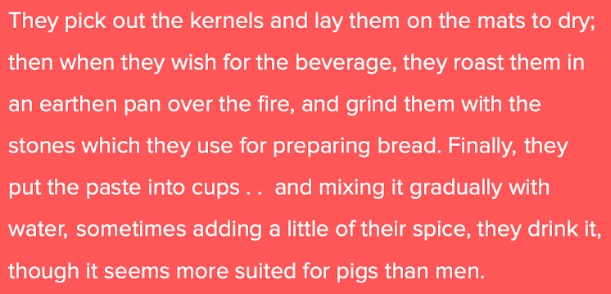


Imagine our disbelief when we learnt that our delicious chocolate has been termed as something that is suited for the consumption of pigs! And then we learnt that what we read was one of the first detailed accounts of the original chocolate that comes from the History of the New World (1564) by the Milanese Girolamo Benzoni, who travelled in Central America. 


So the story goes like this. In the early days, before the 16th century, chocolate wasn’t this creamy, rich, sweet, sensuous, soft, decadent and super addictive food that we know of. It was extremely bitter, gruelly, coarse, crumbly and too heavy to eat. More than a treat, it was a treatment, used as a medicine or fed to soldiers as an instant energizer to prepare them for war. 


It is only through the human desire to improvise, innovate and derive pleasure that we got the chocolate that we know. It is a great example of human ingenuity in action.


So if you were born before the 16th century, your experience with chocolate would have been very different. So different that if you time travelled and reached this day in Switzerland and tasted chocolate, chances are you wouldn’t be able to make any association of one with the other.


And this is the short video about the history and evolution of chocolate that we watched,

 https://www.youtube.com/watch?v=ibjUpk9Iagk


Chocolate has been known and loved for many centuries, not only as food but also as medicine. The process of how chocolate is created right from the cocoa beans that grow inside the pods of the cacao trees that are native to central South America to the bars that we relish was worth learning. 


So the next time you find yourself craving some chocolate, don’t dismiss it as simply craving for a sweet treat. It could be an important signal that your heart is in need of love. Give in to the desire and buy yourself a big bar.  
 

MOMO Mania!

“There is nothing in this world that a plate of momos can’t fix.”


As a part of 7D food exploration workshop, we got an opportunity to activate and use all our senses to prepare a  delicious dish of Nepal, Momos. The inspiration came from our facilitator, Shahnaz ma’am, who came across a mother-daughter duo running a small-scale business delivering scrumptious momos to the localities of Delhi.

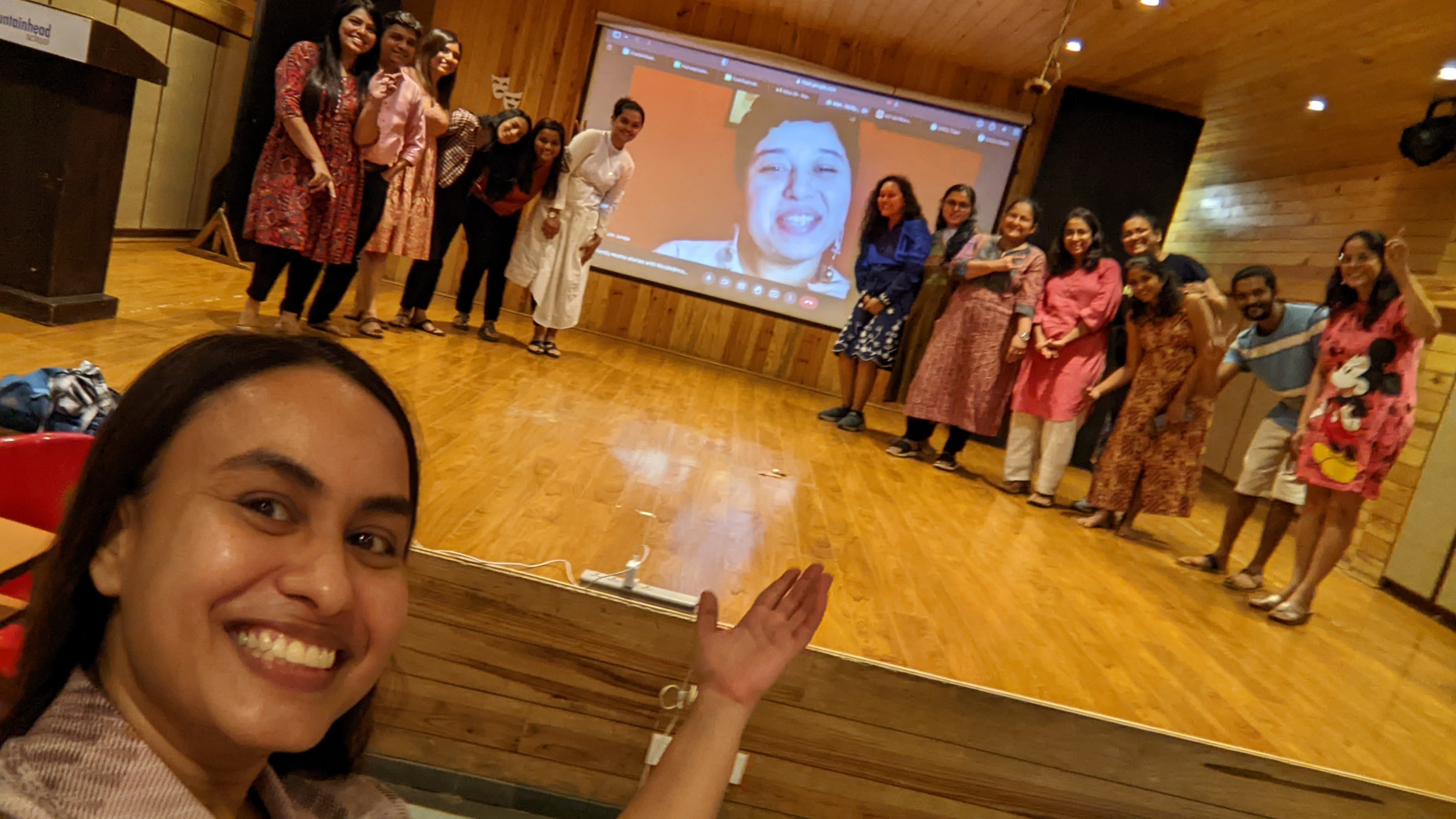
On the first day of our workshop, we got a chance to virtually meet with Nicole Juneja. She shared momo stories which were also her inspiration to start Momo Mood. She answered our questions about momo making and it was amusing to know that even she finds folding momos challenging!

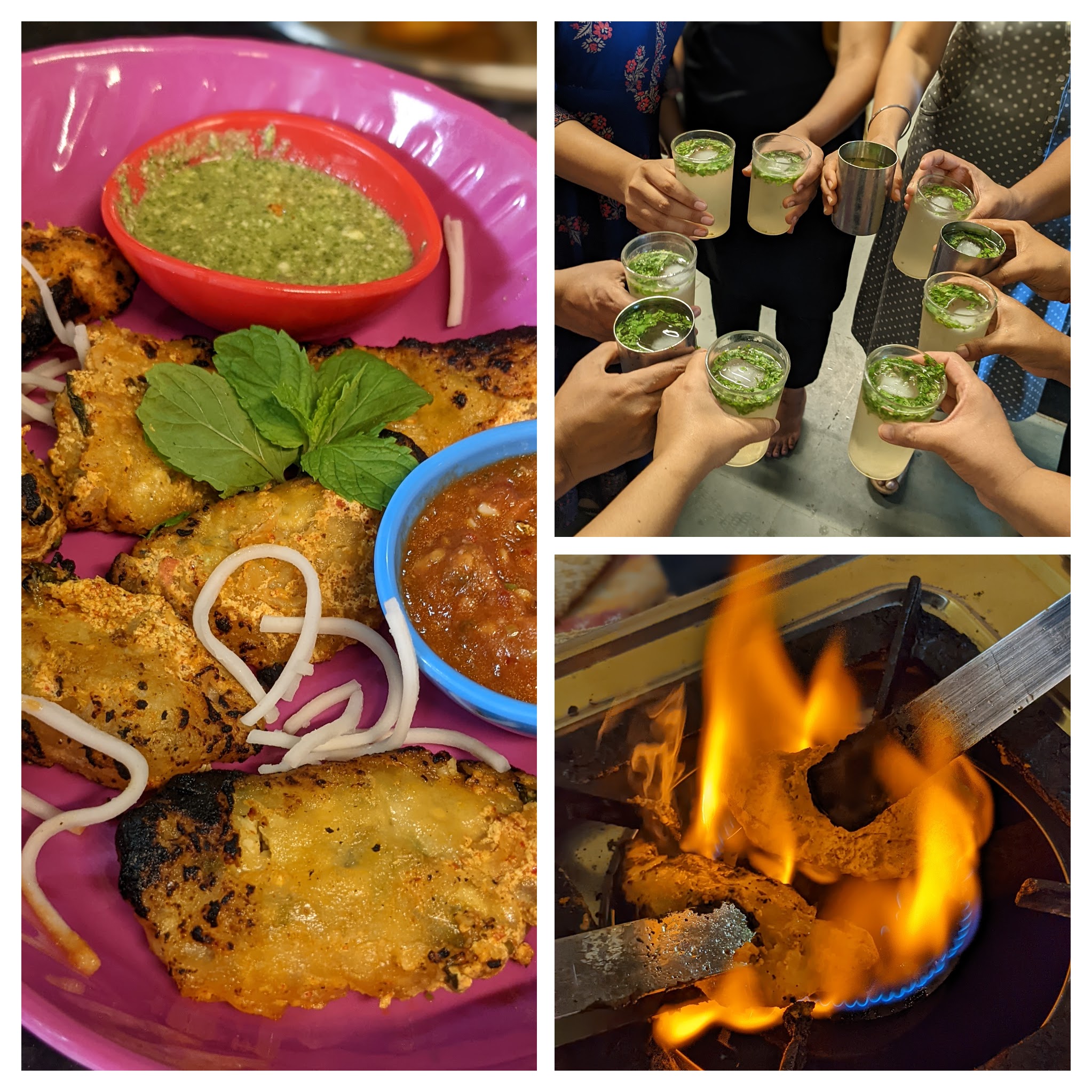
After the guest speaker session, we were given time to research and come up with our own momo recipe. After a lot of brainstorming, the team decided to cook Tandoori momos, Paneer momos, Veg. momos, Fried momos, a variety of momo chutneys and also Thukpa soup.

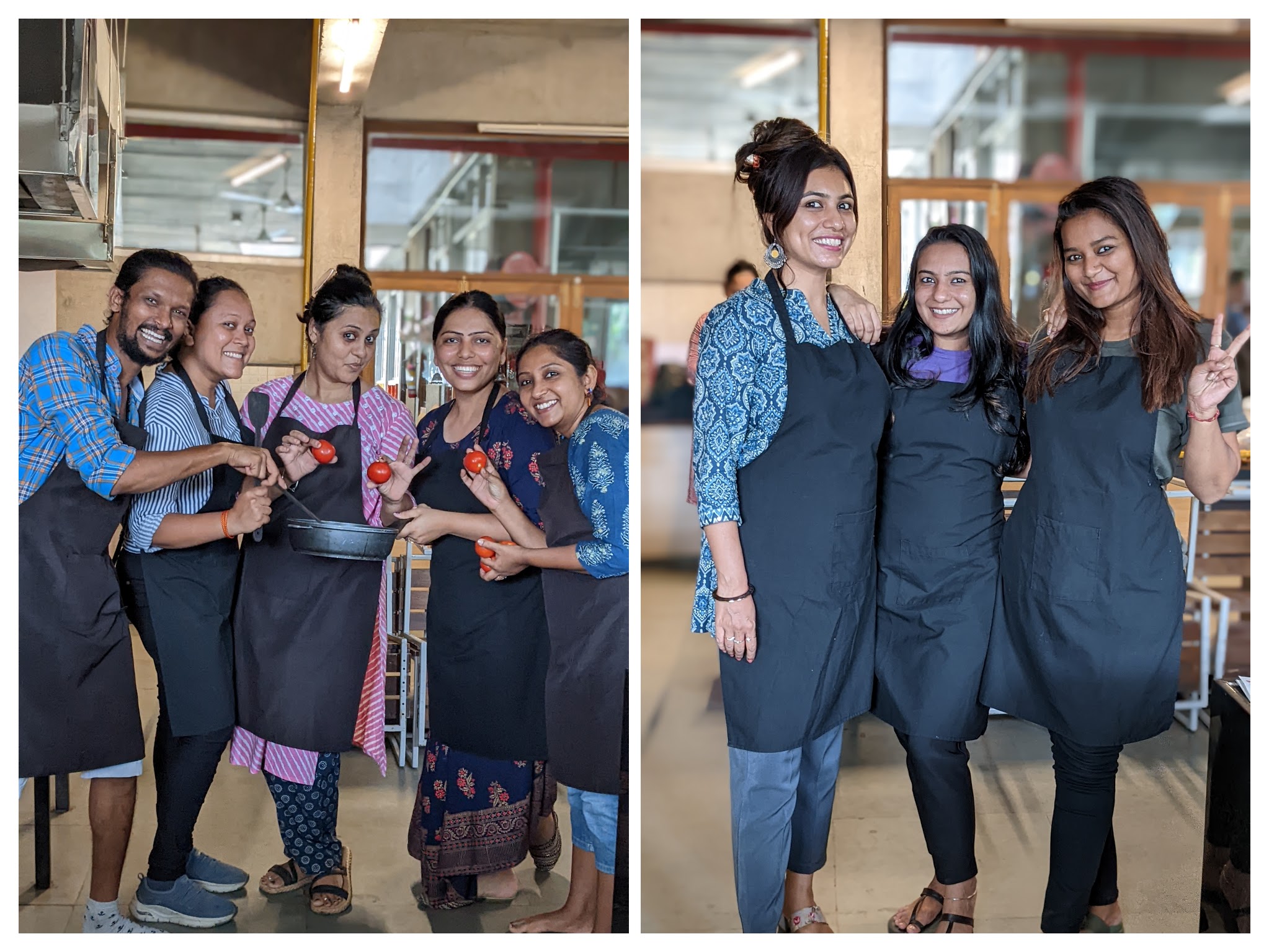
Momos require delicate folding and shaping and since none of us had made it before we were initially skeptical about making so many momos for such a large group of people in such a short period of time (This was supposed to be lunch for 18 hungry tummies!). Once we got to it, surprisingly, things started to fall in place quite effortlessly- people started to take charge of their stations and soon there was so much action, energy and camaraderie that it made us realize that food truly is our common ground, a universal experience as said by James Beard.

We had less than 2 hours in hand to make delicious momos. All the momo enthusiasts started working looking out for the right ingredients, right spices, and bringing the right amount of flavors in their momo stuffing. Everybody showed their creativity in making momos of different shapes and sizes.

It was a lot of fun and enjoyment cooking and eating together. Together we were able to make the world’s best momos, chutney and thukpa (haha, atleast to us they were and will remain the most memorable ones ;)) !!! Just one of the merits of involving all 7 senses!


Emotions of,

Heta, Tabassum and all 7D explorers.

Mehman Nawazi Of Rander


Mehman Nawazi


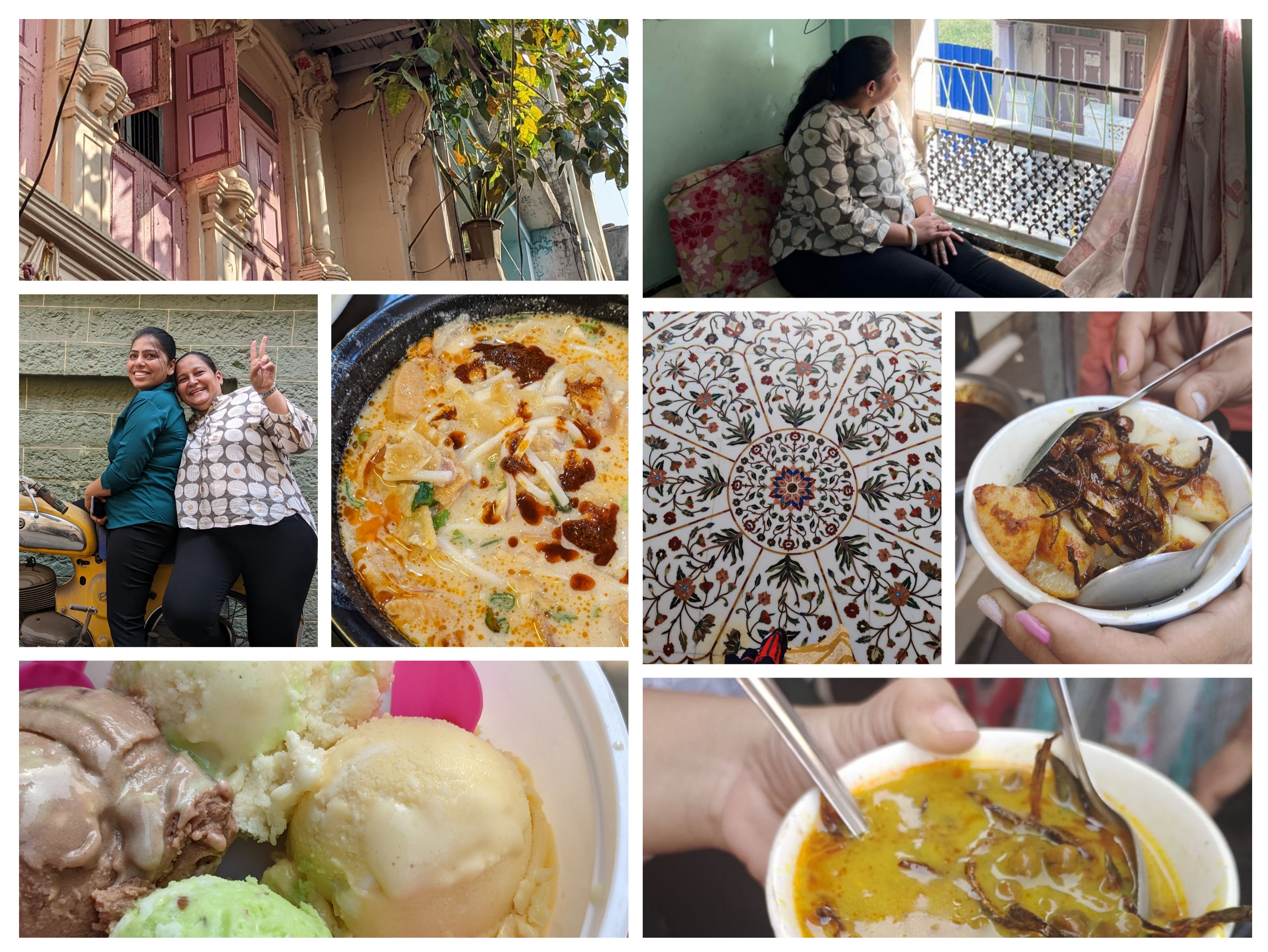
Today we decided to explore the long-lost gem- Rander. I have been in Surat for the past 20 years, but this part of Surat was unknown and untouched by me despite its proximity to our school. We explored and visited the various beautiful heritage sites and charming architecture of Rander. The history of Surat and the stories associated with it brought history alive. It felt like we went back in time. The Jain and the Muslim community living together with many temples and mosques next to each other showed us how the people here lived peacefully and happily together despite what is otherwise believed to be the case. 

The people here were so generous and welcoming, including ‘Abbas bhai’ who from his busy schedule gave us almost 4 hours to help us explore the place. He was polite, soft spoken, smiling and sharing with us all the knowledge about the place. Taking extra efforts to get permissions for places which were otherwise out of reach for us. 

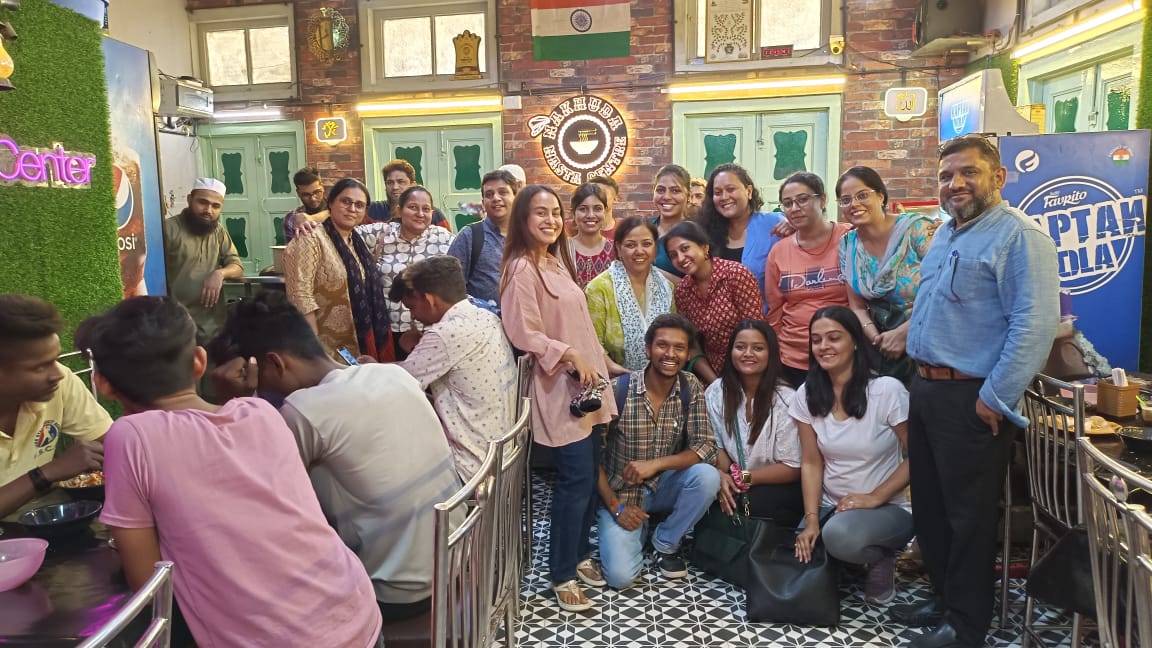
After all the walking, we were not just ready but really hungry for the aloo puri and khawsa that we were here for. So the next stop for us was ‘Nakhuda Nasta center’. The place was brimming with aroma and enticed our tastes buds and we were welcomed here with a warm smile. We were first shown the process of how they make these iconic dishes. He took us to the kitchen, showed the making and answered all the questions. Someone revealing their business secret is something I saw for the first time. 

And finally we ordered everything they had on the menu- Aane do!- alu puri, cheese aloo puri, egg aloo puri, chicken aloo puri, rainbow aloo puri, veg khawsa, chicken khawsa, egg khawsa! After eating to our hearts content we wanted to drink something. He was really kind to get us drinks from another shop. This seemed like a local fav- RimZim which was really refreshing and reminded us of our childhood days. Next on our list was hand churned ice cream! And not just one flavor, Abbasbhai got us 12 different flavors! When the plates arrived on our tables we were all love struck- the colors and creaminess..After eating so much we were pretty sure we won’t be able to finish it but when we looked around after 10 mins all the plates were licked clean! 

“Atithi Devo Bhava “

Something I have only heard since I was a child, I experienced today. 

This Mehman Nawazi of Rander blew our minds and made the humble experience of eating aloo puri and khawsa into an unforgettable memory. In Rander you get not just good food but also truly authentic human beings!
This is the end of the story

Regards,

Payal Jain

7D food exploration -Life Chutney taught me a lesson which I won’t forget for my life.

When we all entered the kitchen and saw ingredients that we could hardly associate with chutney and we all were a little skeptical about it. We were wondering what to do with all these weird ingredients. That is when we are told this is going to be our life chutney. We can pick up as many ingredients as we wish and in the quantity, we want to prepare our life chutney. 

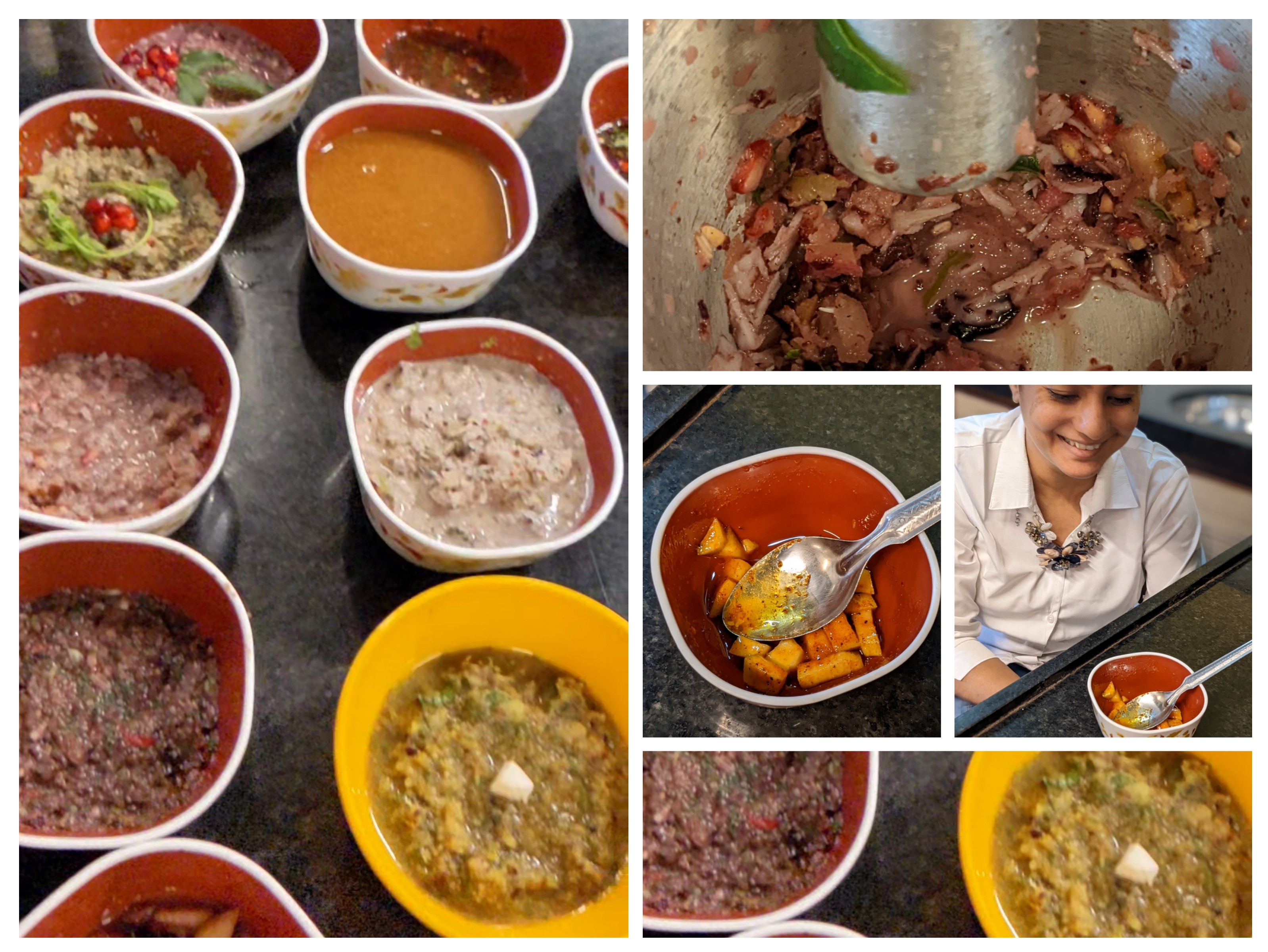
The flavors were synonymous with the experiences in my life I started to see the flashback of my journey while picking every ingredient- sweet, sour, bitter, tangy, spicy, salty- each ingredient I picked reminded me of a phase in my life. Also, the way my life has different colors I made sure to add different colors to my chutney- beautiful purple from Kokam and delicate white from Coconut. The pounding of chutney reminded me of the difficult days of my life. But like the pounding of chutney released the flavors, infused them together, and turned separate ingredients into this chutney, the grinding that I got from life was also something that brought me closer to who I am now- someone who is made stronger with time and can face any challenge with a smile.

Overall a lesson learned is that life pounds you and it has all different flavors. You have to take it as essential for the outcome expected. 


A few other thoughts on life chutney from my food explorer friends:

Mariyam – I will remember the making of life chutney and sharing of the experiences by my fellow foodies. I gave myself the luxury of enjoying the process of grounding and relishing the chutney which life makes out of me!!

Subhalaxmi – Everyone’s definition of ‘chutney’ is different, just like everyone’s perception of how life ought to be lived.

Payal – During this, I realized my true nature. I  wanted to add all the flavors. I also wished that my life chutney should be the best and liked by everyone. This is a feeling that I could also relate to my real life where I always try my best in whatever I do. I want to be liked by all and I try to add all the flavors of my attitude to things that I do in my real life.


Me and my ramblings – an inward journey (7D food exploration)

What is a person who is not a cook by choice doing in a food workshop? Well, learning to like the 7-dimensional experience associated with food, that’s what!

What enticed me to the workshop possibility was the wonderful collage of videos and associated big ideas that came my way as this year’s life class possibility. I filled it up just because it was something different. Something that seemed hands-on. And the workshop has not disappointed. If anything it has helped me learn a lot about myself as a person.

Here are four things I have understood about myself through the 6 days journey:
1. I have a cooking preference – being an introvert by nature, I like my kitchen space to myself. I don’t like people hovering and I am a stickler for authenticity in names (“Dhosa” vs “Thosai” #IYKYK)

https://photos.app.goo.gl/BfiVwZuXsSu9bTfa9

2. I need to learn to let go of my perceptions – when I sat down to relish the Onam Sadya meal myself I was surprised at how authentic it tasted despite being cooked by people who knew little to nothing about the dish. I learnt that letting people enjoy a challenge is not bad after all! I assumed that people with varied backgrounds will find it difficult to learn how to cook a typical dish – but the Onam Sadhi dismantled that perception, and how!
https://photos.app.goo.gl/nZYVksDbRumjfMb6A

3. It is not bad to watch a youtube video and learn how to cook a dish – when I did that with the momo-making exercise, I was pleasantly surprised that I could do something that I had been making fun of for so long. I now watch these Instagram reels on making food (watch, not make, so don’t consider yourself invited!)

https://photos.app.goo.gl/XkeStGu6ipqckxSPA

4. In giving we receive – the visit to Dome Pizzeria was one of the most beautiful learning experiences about being a kind/non-judgemental teacher (Thanks, Shrey). It also underscored for me the assumption that children who are ‘underprivileged’ need us to ‘help’ them. What we did there was not charity. It was something we did to make ourselves feel good (compounded by the fact that the Pizza and Iced-tea we served them is not the kind they enjoy).
https://photos.app.goo.gl/81rfzGYVrbu1eHbF8

Thankful for the experience! But if at the end of it, you ask me ‘why the name 7D?’ I’ll say, just because Shahnaz is extremely creative!

Art and Skills – Reflection

I enjoyed the first and second day of art and skills class. I learned canvas painting along with making connection with our own emotions. I was able to create my own composition after listening to the interesting story/facts about ‘Phad painting of Rajasthan. I hope to complete my pending paintings and able to showcase on the last day of this class.

I am looking forward for the up coming classes where I will learn more and enhance my art skill.


Book Club 2022-23

Atomic Habits by James Clear

Tiny changes, remarkable results….

That’s the realization that sunk in when I read the book.

Habits shape our identity – this is not a new learning. We have been told this since ages. But this book brought in a lot of takeaways. We always say that habits die hard. But James Clear in this book shares lot of strategies which can be easily implemented in order to inculcate good habits and break the bad ones. The 2 minute rule to stop procrastinating really stuck with me. It says that Habits are the entry point and not the end point. It’s like an entry ramp to a long highway. In order to begin a good habit ensure that the first 2 minutes are easy and once we have standardized these initial 2 minutes, rest will be taken care of.

The book also throws light on how being in motion is different from action, even though at first instance it seems the same. Being in motion involves mere planning, but action involves practice. Repetition is the key to the beginning of any new habit.

Another point worth noting is that focus on the current trajectory rather than current result. 1% improvement daily would compound to 37 times improvement over a year.

The 4 laws of behavior change seemed so relatable. These are simple set of rules to build good habits. They are: 1. Make it obvious 2. Make it attractive 3. Make it easy 4. Make it satisfying.


“Atomic Habits”book by James Clear

Habit is a routine that we follow diligently. Habits could be bad or good depending on your will. Habits can be changed, transformed, and extended.

In the book ” Atomic Habit” by James Clear”.
There are four simple steps to forming a new habit or breaking an old one.
1
Make it obvious
—-The routine which you want to follow should be clear to you and it could be divided into 4 segments, Cue— Craving —- response — reward.
—Once the habit becomes automatic then you do have not to pay attention. A habit scoreboard is a good practice to become more aware of your behavior so that you can track your progress.
—- Pointing and calling out helps out to raise your awareness from a nonconscious habit to a conscious habit.
—- Time and Location are the two most important cues.
—– Motivate yourself and the environment plays a crucial role in forming new habits.
—- Make the cues of good habits obvious in the environment.
—- If possible make the entire context become the cue.
—-People with high self control tend to spend less time in tempting situations. It is easier to avoid temptations than resist it.
—- Self-control is a short-term strategy, not for the long term.
2.
Make it Attractive
The most attractive opportunity is, the more likely to become habit-forming.
—- Temptation bundling is one way to make your habits more attractive. The strategy is to pair an action you want to do with an action you need to do.
—– The role of Family and friends is too important.
—- The culture we live in determines the behavior which is attractive to us.
—-  We tend to adopt habits that get appreciated by our group or culture because we want to fit in that group.
— we tend to imitate the habits of our close friends and relatives or powerful people with status and prestige.
—– Join a culture or group of people with your desired behavior.
——- If a behavior gets approval, respect, or praise we find it attractive.
Make bad habits unattractive
– Every behavior has an underlying motive. Your habits are modern-day solutions to ancient desires.
—- Highlights the benefits of avoiding a bad habit to making it unattractive.
—- Habits are attractive when we associate them with positive feelings. Create a motivational ritual by doing something you enjoy.
3.
Make it easy 
—- Practice your new habit and make it simple. 
——Focus on action not being in motion.
—— make automatic through repetition, the number of time matters more than the amount of time.
—- Human behavior is to put the least effort.
—- Create an environment where doing the right thing is as easy as possible.
—-Reduce the friction associated with good behavior.
—– Increase the friction associated with bad behavior
——Set your environment to make future actions easier.
—– The 2-minute rule says that do for a limited time.
—— using technology to automate habits.
4
Make it satisfying 
—- Satisfaction leads to repeated behavior.
—– Immediate rewards are preferred instead of future rewards.
—– success or progress motivates u to repeat the habit.
—– immediately punished and rewarded behavior can affect repetitive habits.
—— Habit tracking is good to see the progress.
—– Never miss twice. Try to keep on track as early as possible.
—— Less likely habit would not be repeated it is painful.
——- Habit contract can be used to add a special cost to any promise.
These are the points on which I focus and get a new habit formed.
1 4 5 6