Life Class: EI and People management – Gamma – 2026-27

Over the past life-classes, I have started looking at leadership from a different perspective. I may not be a leader right now, but I aspire to become one. These sessions have helped me understand that leadership is not simply about having a position or authority; it begins with self-awareness, emotional regulation, discipline, and the ability to bring out the best in others.

Understanding Myself and My Emotions

One of my key learnings was about amygdala hijacking and how it can influence our decision-making. When emotions take over, we may react impulsively instead of responding thoughtfully. I learnt the importance of recognising emotional triggers, pausing, regulating my emotions, and then choosing an appropriate response.

This connected strongly with my understanding of leadership: noticing emotions, feeling and understanding them, and choosing the right response rather than simply reacting.

The Marshmallow activity/video also helped me understand delayed gratification and impulse control. It reminded me that meaningful results often require patience and the ability to look beyond immediate rewards.

Understanding Myself Through the Johari Window

The Johari Window was another powerful reflection tool. Dividing my understanding into what is known to myself, not known to myself, hidden from others, and unknown to both myself and others helped me identify different aspects of my personality.

It made me think about my strengths, weaknesses, behaviours, and blind spots and how greater self-awareness can help me prepare myself for future leadership responsibilities.

Strengths That Can Also Become Limitations

I also reflected on behaviours that may contribute to my success but could potentially become challenges if they are not balanced.

For example, being organised, taking responsibility, supporting others, and uplifting people can be valuable qualities. However, if I overuse them, I may end up taking responsibility for everything, solving problems for others, or rescuing people instead of allowing them to learn and grow.

This was an important realisation for me: a strength becomes a limitation when it is used without awareness or balance.

Rethinking What Leadership Means

My understanding of leadership has shifted from seeing it as leading people to seeing it as enabling people.

I learnt about leadership discipline through four important ideas:

  • Create psychological safety – create an environment where people feel comfortable sharing ideas, asking questions, and making mistakes.
  • Coach rather than control – guide people through questions and support rather than always providing instructions.
  • Develop people rather than rescue them – allow people to face challenges, take ownership, and learn from their experiences.
  • Build interdependence – understand that effective leadership is not about doing everything alone; it involves asking questions, seeking perspectives, and working together.

The biggest paradigm shift for me was realising that I do not always need to provide the answer. Sometimes, asking the right question can help someone find the answer themselves.

Learning to Give Better Feedback

I also learnt the SBI model of feedback — Situation, Behaviour and Impact. Instead of giving vague feedback or making it personal, I can focus on:

Situation: When and where did it happen?
Behaviour: What specifically did the person do?
Impact: What effect did that behaviour have?

This approach can make feedback more specific, objective, and constructive.

What I Want to Take Forward

These learnings have made me realise that becoming a leader is a journey, not a title. Before I can effectively lead others, I need to understand myself, recognise my emotional triggers, manage my reactions, seek feedback, and continuously work on my blind spots.

I want to become someone who does not simply tell people what to do, but helps them think, grow, and take ownership.

My biggest takeaway is simple:

Leadership starts with leading myself before I can aspire to lead others.
Emotional Intelligence and People management

The two days of Life Class provided a meaningful opportunity to understand myself, my emotions, and my interactions with others more deeply. The sessions were engaging and offered several practical insights that I can apply in both my personal and professional life.

One of my key learnings from Day 1 was understanding the concept of an Amygdala Hijack and the biological process behind our emotional responses. It helped me realise why we sometimes react instinctively in challenging situations before we have the opportunity to think things through. More importantly, I learned the value of recognising when I am experiencing an amygdala hijack and consciously pausing before responding. Exploring our workplace triggers also encouraged me to reflect on situations that may influence my reactions and how I can prepare myself to respond more thoughtfully.

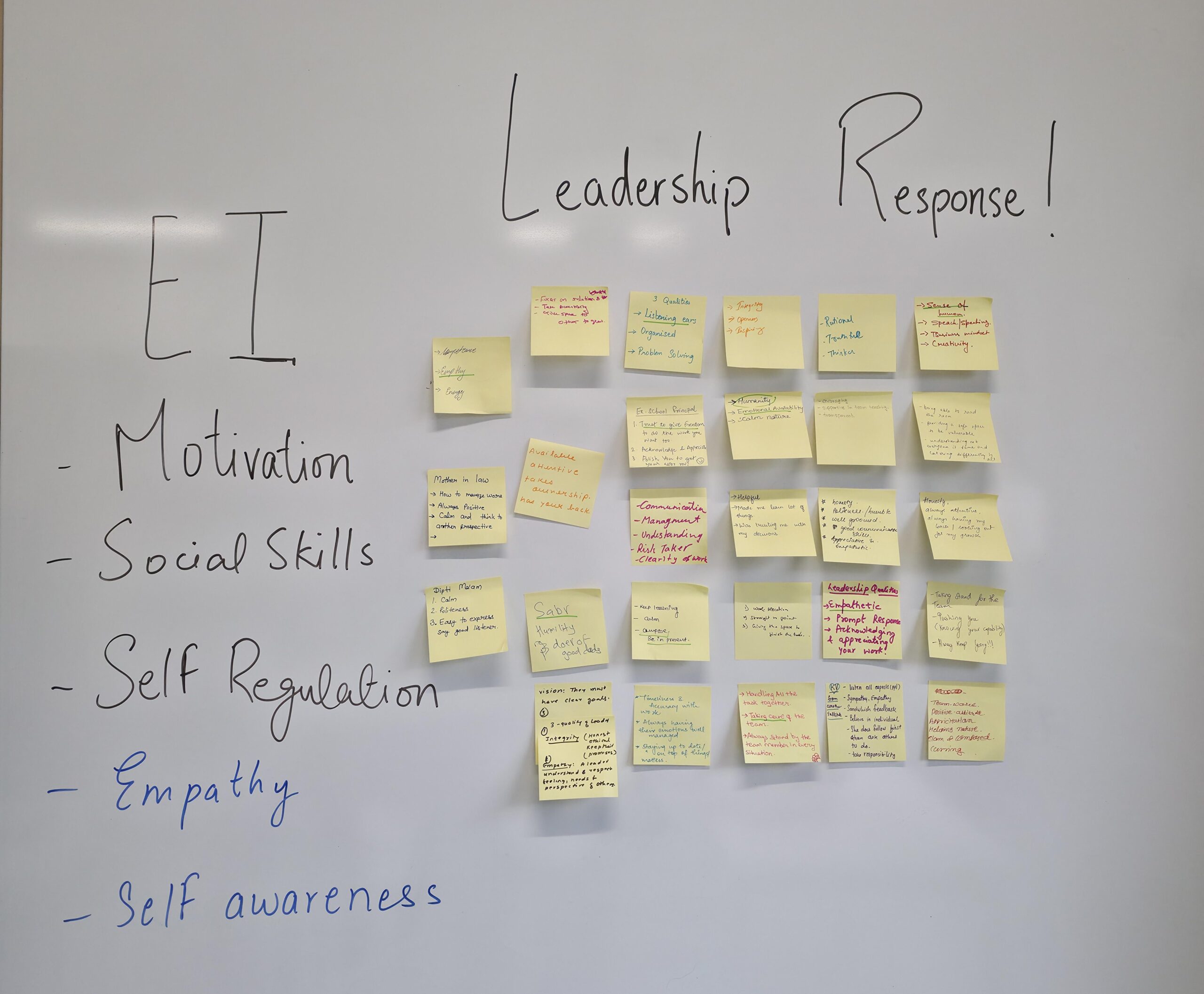
We also explored the five components of Emotional Intelligence—self-awareness, motivation, self-regulation, empathy, and people skills. This helped me reflect on how these skills shape the way I understand myself, manage my emotions, and build meaningful relationships with others.

Day 2 brought equally valuable insights. The discussion around delayed gratification, through the Marshmallow Test, helped me understand the importance of looking beyond immediate comfort or pleasure and making choices that can benefit us in the long term. It also made me reflect on how this approach can help us manage stressful situations and make more thoughtful decisions.

Another important learning was the SBI model—Situation, Behaviour, and Impact—for giving effective feedback. I found this approach useful because it encourages feedback to be specific, objective, and focused on the impact of a particular behaviour, rather than depending only on the traditional sandwich feedback method.

We also explored Google’s research on effective teams, which highlighted the importance of psychological safety, dependability, structure and clarity, meaning, and impact. This made me reflect on how individual behaviours and team dynamics contribute to creating a supportive and effective workplace.

My favourite activity was the Johari Window, especially the two-mask activity. It was interesting to explore the difference between how we see ourselves and how others may perceive us. The activity encouraged me to think about the importance of being open to feedback and recognising aspects of ourselves that may not always be visible to us.

Overall, the two days of Life Class encouraged me to look inward and become more mindful of my thoughts, emotions, reactions, and relationships. The sessions reinforced the importance of self-awareness, pausing before reacting, understanding others, and continuously working on myself. The concepts were simple, practical, and relevant, making them valuable learnings that I can carry forward into my everyday life.

EI + People Management

It was a very insightful and engaging session. I particularly liked the discussion on the difference between being a good leader and a good manager, and how it can impact team performance. The session also provided useful insights into giving constructive and one-to-one feedback, and why effective feedback is important for individual and team growth. Overall, it was a very good learning experience.

Emotional Intelligence and People management

In the recent life class, I learned about some important topics related to emotional intelligence, reacting vs. respondings, and leadership.

An interesting topic to me was amygdala hijack. It explains how, when we are stressed, angry, scared, or under pressure, we may react quickly without thinking properly about the situation.

Pausing before reacting is one important topic I learned. Taking a few moments to breathe, understand the situation, and then respond can help us deal with challenges in a calmer and better way.

I also understood that being a good leader is not just about giving instructions or making decisions. It is about understanding different points of view, showing empathy & staying calm.

EI + People Management

During the past two days of Life Class, I had the opportunity to explore some meaningful concepts around emotional intelligence, self-awareness, and effective leadership. The sessions helped me look at everyday workplace situations from a different perspective and understand how our emotions can influence the way we respond.

One of the most interesting concepts I learned was the amygdala hijack — a situation where our emotional brain can take over when we experience stress, pressure, anger, or fear. In such moments, we may react immediately without giving ourselves enough time to think about the situation or its consequences.

A key learning for me was the importance of pausing before reacting. Taking a moment to breathe, understand what is happening, and then consciously choosing how to respond can help us handle difficult situations more calmly and thoughtfully. Sometimes, that small pause is enough to create a bridge between an emotional reaction and a rational response.

The sessions also helped me understand that being a good leader is not only about making decisions or giving directions. It is also about self-awareness, empathy, active listening, staying calm under pressure, understanding different perspectives, and responding with maturity and respect.Overall, these two days reminded me that we cannot always control the situations around us, but we can learn to control how we respond to them.

Emotional Intelligence:

The two-day Life Class on Emotional Intelligence and People Management gave me an opportunity to look at everyday interactions from a different perspective. The activities and discussions helped me connect the concepts with situations that we commonly experience at work and in our personal lives.

One thing I found particularly useful was learning about different emotional responses and how they can influence our behaviour. It made me realise that the way we handle a situation can sometimes be more important than the situation itself. Being aware of our emotions can help us communicate more thoughtfully and avoid unnecessary misunderstandings.

The discussions on self-awareness and understanding others also stood out to me. We often understand our own intentions, but the way our actions are perceived by others can be different. This made me think about the importance of knowing how our behaviour affects the people around us and being willing to look at ourselves from another person’s perspective.

I enjoyed the activities related to communication and listening. They highlighted how easily we can make assumptions when we do not listen carefully. Giving someone enough time to express their thoughts and trying to understand their point of view can make conversations much more effective.

The People Management part of the class helped me understand that managing people is not only about assigning responsibilities or getting work completed. It also involves trust, empathy, understanding individual differences, giving appropriate feedback, and maintaining healthy working relationships. These are skills that can be useful in our day-to-day interactions with colleagues and students.

Another important takeaway for me was the value of reflection before action. Instead of immediately responding to every situation, taking a little time to understand what is happening can help us make better choices. I feel this is something I can consciously practise in my daily work.

Overall, the two days were a good opportunity to learn, participate, and reflect on my own way of communicating and working with others. I would like to take these learnings forward by being more mindful of my emotions, listening more carefully, and making an effort to understand different perspectives before responding.

Life class Day 1 & 2.

Life Class Reflection: The Leader in Me

The two-day Life Class workshop on leadership and emotional intelligence gave me a chance to pause and look inward — something that rarely happens in the middle of a busy administrative routine. Working alongside teachers and HR colleagues, all learning together without our usual designations attached, made the sessions feel less like training and more like genuine reflection.

One of the biggest learnings for me was the distinction between reaction and response. Reaction is impulsive, driven by short-term emotion, and often shaped by whatever situation triggered it in the moment. Response, on the other hand, is thoughtful — anchored in values and built for long-term outcomes. Understanding the Amygdala Hijack made this click for me. I could immediately recall moments where I’ve felt wrongly blamed, unheard, or treated unfairly, and noticed how quickly those feelings can hijack a conversation before I’ve had a chance to think it through. Learning that this is a natural, almost automatic brain response — and not a character flaw — was oddly reassuring. It also made me realise that the six-second pause before reacting is a small but powerful tool I can actually practise.

The Leader’s Mirror exercise was where things got personal. We were asked to identify the behaviours that have made us successful, and then, just as importantly, to ask when that same behaviour might work against us. As someone from administration, I often see myself as the one who ensures things run on time, completes work as expected, and helps others when needed. But this exercise made me realise that my dedication to completing tasks perfectly can tip into over-dedication — not prioritising within a timeline, or not delegating simply because it feels faster to do it myself. Being the best at doing something is not the same as being the best at enabling others to do it. That line stayed with me long after the session ended.

The Johari Window gave structure to this self-reflection. Mapping what I know about myself, what others see that I don’t, what I keep private, and what remains undiscovered helped me understand why feedback can feel so uncomfortable — and so necessary. It reminded me that my blind spots aren’t failures; they’re simply areas I haven’t yet opened up to honest input. I want to get more comfortable asking colleagues directly, “What’s something about how I work that I might not see?” rather than waiting for feedback to arrive on its own.

We also spent time on giving feedback using the SBI model — Situation, Behaviour, Impact. Keeping feedback factual, rather than personal, is something I know matters, especially in an administrative role where I often have to communicate expectations across departments. Framing feedback around what happened and what impact it had, instead of judging the person, feels like a much more respectful and effective way to have those conversations.

More than any single concept, these two days reminded me that people management — even from behind the scenes in administration — begins with self-management. The systems and processes I coordinate every day run only as well as the relationships behind them, and those relationships depend on how aware I am of my own responses, blind spots, and habits.

My biggest takeaway from the workshop is simple: pause before reacting, stay open to what I don’t see about myself, and give feedback that focuses on the situation, not the person. It’s a small shift in practice, but I hope to carry it into the everyday moments of my role — because leadership in administration isn’t about visibility, it’s about the quiet consistency of how we show up for the people around us.

Two Days of Life Class: Understanding Ourselves to Understand Others

During my recent two days in Life Class, I had the opportunity to dive deeper into the world of emotional intelligence, a topic I have always been genuinely interested in, especially coming from a background in psychology. While the basic concepts of emotional intelligence were familiar to me, exploring how they apply specifically to the workplace gave me a fresh and meaningful perspective.

One of the most fascinating takeaways from the sessions was learning about the role of the amygdala – a small, almond-shaped cluster of nuclei in our brain that has a significant influence on the way we react and behave. Despite its small size, its impact on our emotional responses can be quite powerful.

In a professional environment, this tiny part of our brain can have a major influence on how we respond to everyday situations. We have all experienced moments when workplace stress or pressure gets the better of us. This is where the concept of an amygdala hijack comes into play. It occurs when the amygdala triggers an immediate fight-or-flight response to a stressful situation, temporarily overriding our ability to think and respond rationally. It is in these moments that emotions such as anger or fear can take control, leading us to react impulsively without fully considering the consequences.

The key, therefore, lies in creating a bridge between our immediate emotional reactions and our rational thinking. I learned that something as simple as taking a brief pause, breathing, and giving ourselves a moment to think can make a significant difference. Instead of allowing an amygdala hijack to control a stressful interaction or rushed decision, that small pause gives us the opportunity to respond thoughtfully rather than react impulsively.

By developing greater self-awareness and empathy in the workplace, we can become more mindful of our emotional responses, recognise when our internal alarm bells are going off, and take a step back before responding. This can help us navigate workplace pressures with greater calmness, confidence, and grace.

After all, understanding the science behind our emotions and reactions is an important first step towards learning how to manage them better.

Learning from Two Days of Life Class

The two days of Life Class were a great opportunity to understand myself, my emotions and my interactions with others better.

One of the most important learnings from Day 1 was understanding the Amygdala Hijack and the biological process behind our emotional responses. It helped me understand why, in certain situations, we may react before we have had the chance to think. More importantly, I learned the importance of recognising when I am experiencing an amygdala hijack and pausing before responding. We also explored our workplace triggers, which helped me reflect on situations that may affect me and how I can prepare myself to respond differently.

We also learned about the five components of emotional intelligence: self-awareness, motivation, self-regulation, empathy and people skills. This made me reflect on how these skills influence the way we manage ourselves and connect with others.

Day 2 brought equally interesting learnings. We explored delayed gratification through the Marshmallow Test and understood how delaying immediate pleasure can help us manage stress, situations and decisions better in the long run.

We also learned about giving effective feedback using the SBI model: Situation, Behaviour and Impact, rather than relying only on the traditional sandwich feedback approach. Another key learning was Google’s research on effective teams and the importance of psychological safety, dependability, structure and clarity, meaning and impact.

My favourite activity was the Johari Window, conducted through the two-mask activity. It was interesting to see how our perception of ourselves can sometimes be different from how others perceive us.

Overall, these two days reminded me of the importance of self-awareness, pausing before reacting, understanding others and continuously working on myself. The concepts were simple, practical and something I can carry into my everyday life.

The Mask I Wear, and the Me Behind It

Two days of Life Class on Emotional Intelligence and People Management just ended, and I am still thinking about it. Not because of big theories, but because of a few simple activities that made me look at myself honestly.

The mask activity

This was my favourite part of the whole workshop.

We were given a mask. On the front side, we had to write the things people already see in us. I wrote words like angry, not serious, open minded. These are the labels people give me from outside, based on how I behave in front of them.

On the inside of the mask, we had to write the things people do not know about me. That part was harder. It made me sit quietly and think about which parts of me I keep hidden, and why.

The best moment came when I wrote down something about myself that most people around me have never noticed. Writing it down felt strange. I had never put it in words before. That is when I understood the point of the activity: we all show one face and carry another one behind it, and most of the confusion between people happens in that gap.

Naming my emotions

In another activity we had to slow down and actually name what we were feeling instead of just reacting. Sounds easy. It is not. Most days I feel something and jump straight to action, and only later think about what it was.

Once I started naming the feeling, the feeling had less control over me. That is a small trick I want to keep using.

Journaling — four lines that stayed with me

At the end we did a short journaling exercise. Just four lines to complete:

  1. My emotions create…
  2. My team experiences me as…
  3. One emotional behaviour I will change…
  4. One management behaviour I will start…

Line two was the uncomfortable one. It is easy to say what I want my team to see. It is much harder to guess what they actually see.

My honest answers:

  • One emotional behaviour I will change: reacting quickly. I want to pause first, then reply calmly.
  • One management behaviour I will start: setting clear priorities and telling people about them properly, not assuming they already know.

Giving feedback the SBI way

We also learned the SBI model for feedback — talk about the Situation, the Behaviour, and the Impact. No character judgement, no “you always do this”.

This one is going straight into my daily routine. Saying “in yesterday’s meeting, you interrupted twice, and the other person stopped sharing” is useful. Saying “you are rude” only starts a fight. Same message, very different result.

Thank you to our facilitators

Puja Ma’am and Hardik Sir made these two days easy to sit through and hard to forget. They kept the room light, gave everyone space to speak, and turned every idea into something we could actually try the next morning. Thank you both.

What I am taking home

Nothing dramatic. Just this: before I manage anyone else, I have to manage my own reaction. Notice the feeling, name it, pause, then speak.

The mask will always be there. But now I know what is written on both sides of mine — and that is a good place to start.

1 … 4 5 6 7 8 … 10