EI & People Management(Beta) – Day 3 & 4

The Life Classes sessions gave me an opportunity to reflect on myself, my interactions with others, and the way I contribute to a team. One of the key areas we explored was intrinsic and extrinsic motivation. I realised that people are motivated by different factors—some through recognition and rewards, while others are driven by purpose, learning and personal satisfaction. Understanding these differences can help us work better with people and support them in ways that are meaningful to them.

The Gifts and Hooks activity encouraged me to reflect on my own strengths as well as the habits or behaviours that may sometimes become challenges. Similarly, the concept of Mirror and Window helped me understand the importance of looking inward and reflecting on my own actions, while also making an effort to understand situations from another person’s perspective. These activities made me realise that self-awareness is an important part of personal and professional growth.

The activity on HR and teamwork also helped me understand the importance of recognising individual strengths and creating effective team dynamics. Through the activities, I experienced how communication, trust and collaboration influence the way a team functions. I also realised that effective teamwork is not about everyone working in the same way, but about bringing together different strengths and perspectives towards a common goal.

Overall, the Life Classes sessions encouraged me to become more reflective about the way I work and interact with others. My biggest takeaway is that effective leadership and teamwork begin with understanding ourselves and appreciating others. Being aware of our motivations, recognising our strengths and areas for growth, and being open to different perspectives can help us become better collaborators and more effective members of a team.

Life Classes – Days 3 & 4: Looking Inward, Thinking Beyond Myself

Days 3 and 4 of Life Classes helped me look beyond concepts and reflect on how I think, contribute, and take responsibility. Through activities, discussions, self-reflection, and Mission Mangal, I gained some meaningful insights into leadership and personal growth.

From an Individual Mindset to a Leader’s Mindset

One of the most interesting activities was understanding the difference between an individual mindset and a leader’s mindset. We were given different situations and asked to think about how our approach would change when we became responsible for a team.

As an individual, we may naturally focus on our own priorities. As a leader, however, we need to consider different perspectives, the team’s needs, and the larger goal.

My biggest takeaway was that leadership is not about being in charge; it is about taking responsibility. It requires us to move from “What is best for me?” to “What is best for the team and the common goal?”

The IKEA Effect – Creating Ownership

The discussion around the IKEA Effect showed how people tend to value something more when they have contributed to creating it.

This made me reflect on the importance of participation and ownership in a team. When people contribute their ideas and efforts, they develop a stronger connection with the outcome.

It also reminded me that as a team member, I should take initiative rather than always waiting for someone else to provide a solution. As a leader, I should also create opportunities for others to contribute.

Gifts, Hooks and Self-Awareness

The “Gifts and Hooks” activity encouraged me to look within and identify three qualities I bring to a team and one tendency that I need to be mindful of.

The activity reinforced that self-awareness is an important part of leadership. Knowing our strengths is valuable, but recognising the habits or tendencies that may hold us back is equally important.

It reminded me that personal growth begins with understanding ourselves honestly and being willing to improve.

Leadership Through Mission Mangal

Watching Mission Mangal brought many of these concepts to life. The movie highlighted teamwork, leadership, resilience, responsibility, trust, and a shared vision.

What stood out to me was how people with different personalities, strengths, and experiences came together towards one common goal. The movie showed that leadership is not about one person doing everything; it is about bringing people together, trusting them, and helping them contribute effectively.

My Biggest Takeaway

These two days helped me understand that leadership begins with a change in mindset.

We need to look beyond ourselves, take ownership, understand our strengths and limitations, and value the contribution of others.

Most importantly, I realised that leadership is not just a position or title—it is a responsibility and a mindset. And before we can lead others, we need to learn to lead ourselves.

From Motivation to Vision: What I Took Away from Life Class Day 3 & Day 4

Life Class Day 3 and Day 4 gave me a chance to reflect on my motivation, mindset, leadership, and professional relationships.

The Personal Motivation Map helped me understand what motivates me and what affects my energy at work. The discussion on individual mindset and manager mindset also showed me how our perspective needs to change when we take greater responsibility.

The HR hiring activity was interesting because it helped me understand that different roles require different skill sets. We also explored leadership through activities and the movie Mission Mangal, which showed how different strengths can come together to achieve a common goal.

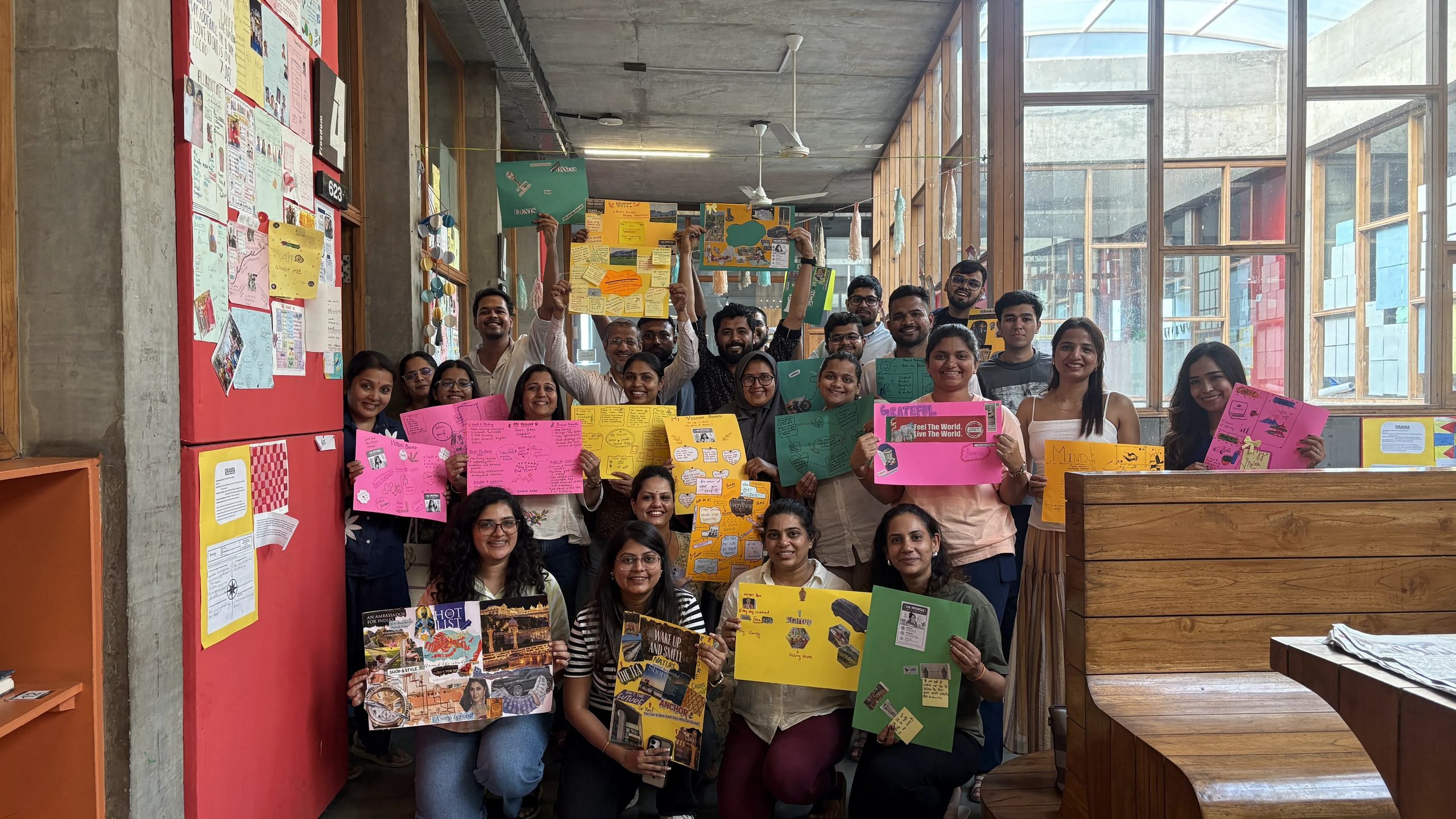
One activity I particularly enjoyed was creating a vision poster using old magazines and newspapers. It made me think about my goals and the direction I want to take in the future.

Overall, these sessions reminded me that growth is not just about improving our skills—it is also about understanding ourselves, working better with others, and having a clear vision for where we want to go.

From Self-Awareness to Better Leadership

The Life Classes sessions gave me an opportunity to reflect on how I understand myself and how I work with others. One of my biggest learnings was that good leadership begins with self-awareness.

The Personal Motivation Map helped me understand what motivates me and what affects my energy at work. I also learned that motivation is different for everyone, so understanding what matters to each person is important.

Another valuable learning was “Notice → Be Curious → Understand → Respond.” Instead of reacting immediately, taking a pause and listening can help us understand the real situation better.

The sessions also introduced ideas like the Mirror and Window, which reminded me to reflect on my own actions while also considering other people’s perspectives. The Gifts and Hooks activity helped me recognise my strengths and the habits I need to improve.

Finally, the discussions on teamwork and leadership showed me that leadership is not about doing everything myself. It is about trusting, supporting and enabling others.

My biggest takeaway is simple: before we can lead others effectively, we need to understand ourselves, listen to others, and be willing to keep learning.

Reflections from Life Class – Day 3 & Day 4

The last two Life Class sessions gave me many opportunities to reflect on my behaviour, motivation and the way I work with others.

On Day 3, I realised the importance of pausing before reacting. The Personal Motivation Map helped me understand what motivates me, what affects my motivation and what I value from the people I work with. I also learned to Notice → Stay Curious → Understand the Need → Respond Appropriately instead of reacting immediately.

On Day 4, we explored Intensive and Extensive Motivation and how the right kind of pressure can sometimes bring out our best. I also understood the importance of looking at situations from a different perspective rather than getting stuck with only one way of thinking.

The discussion on delegation and leadership was another valuable takeaway. I realised that leadership is not about doing everything yourself. Sometimes, it is about trusting others, supporting them and helping them become capable.

Overall, these sessions reminded me that personal growth starts with understanding ourselves and being willing to look at situations differently. Every small change in the way we think or respond can make a difference. 🌸

Looking Beyond the Problem

This session made me reflect on how differently a situation can look when we are responsible not just for ourselves, but also for a team. Sometimes, it is about pausing, understanding what is really happening, and looking at the situation from more than one perspective. Mission Mangal brought this to life quite well. The team had to deal with deadlines, limited resources, disagreements, and personal challenges, while still working towards one common goal. What stood out to me was that leadership was not about having all the answers, but about keeping the team together and finding a way forward.

The Mirror and Window concept was another takeaway for me. The mirror reminds us to reflect on our own actions and mistakes, while the window encourages us to recognise the perspectives and contributions of others. I feel both are equally important because it is easy to either overlook our own role in a problem or overlook what others bring to the table. We also discussed how understanding a team member’s perspective can change the way we approach a situation. What may appear to be a performance issue could have a completely different reason behind it. Listening before assuming therefore becomes an important part of managing people.

My biggest takeaway was that good management is not only about managing work; it is also about understanding people. The session made me realise that as responsibilities grow, our perspective also needs to grow- from looking at what is immediately in front of us to understanding the larger picture and the people within it.

Personal Motivation Map & The Leadership Shift

Day 3 and Day 4 were a meaningful learning experience for me. I learned about the Personal Motivation Map and understood what motivates me, what affects my motivation, and what makes me feel valued.

The Mirror and Window concept helped me reflect on my behaviour. I realised that sometimes I need to look within like a mirror, and sometimes I need to look through the window and understand other people’s perspectives.

The Gifts and Hooks theory helped me recognise my strengths as well as the habits I need to be careful about.

The biggest learning for me was the Leadership Shift—moving from “I can do it” to “I can help you do it.” This made me realise that good leadership is about supporting others and helping the team grow.

My takeaway: When I understand myself and others better, I can become a better leader.

Moving from Individual Mindset to Managerial Mindset.

Management isn’t just about deadlines, instructions, or business theories. It’s about how we handle real-world problems and support the people we lead. Reflecting on leadership, especially through stories like Mission Mangal, where teams face tight budgets, high pressure, and unexpected setbacks, shows that good management comes down to a few key mindset shifts:

As individual workers, we focus on our own tasks. As managers, we have to look at the bigger picture and make decisions that help the whole team, even when it isn’t personally convenient.

Good leaders look in the mirror to take responsibility for their own mistakes. They also look out the window to credit their team and recognize everyone’s unique strengths.

When someone falls behind, it’s easy to assume it’s a performance issue. A good manager pauses, listens, and tries to understand what challenge the team member is actually facing.

An idea is only valuable if it actually solves a problem. Since people handle change differently, leaders must give their team time to discuss new ideas instead of forcing immediate buy-in.

Good processes keep work organized, but understanding people is what makes a team succeed. True leadership isn’t about knowing every answer, it’s about staying calm, reflecting on our actions, and viewing every problem from more than one perspective.

From Self-Awareness to Better Teamwork

Lately in our Life Classes sessions on people management, a few things clicked for me.
We started by looking at our own reactions. Most of us have the habit of overthinking or reacting too quickly when something bothers us. The shift was simple but useful — pause, stay calm, listen properly, and give feedback at the right time. It already makes conversations cleaner and less tense.
Motivation also became clearer. We feel good when our work is noticed and appreciated. The energy drops fast when efforts go unseen, expectations are unclear, or blame lands only on one person. Fair treatment and genuine recognition really matter. Getting someone else’s mistakes dumped on you or facing one-sided criticism? That drains you quickly.
Then came a nice question: Am I more of a Mirror or a Window today?
A Mirror reflects and builds on what others are saying. A Window brings new ideas and different angles. Neither is better — the skill is knowing what the team needs from you in that moment.
This ties straight into how we handle bigger work, like adding new technology to a product. The old way is often researching everything alone and just telling the team, or assigning tasks and waiting for the deadline. A better way is sharing the goal early, asking for ideas, shaping the plan together, and checking in regularly with useful conversations. Basically, choosing when to be a Mirror and when to be a Window — while staying calm, listening well, and noticing people’s efforts.

In the end, better leadership and teamwork don’t come from big speeches. They come from these small daily choices — managing our reactions, understanding what drives others, and being intentional about how we show up. Practise them consistently, and the team starts working better together.

Life Class – The Journey Continues: From Self-Awareness to People Management

The journey of the Life Class workshop continued for another two days, and this time the focus moved beyond self-reflection towards motivation, relationships, people management, and leadership. If the first two days encouraged us to look within, Days 3 and 4 challenged us to look outward—to understand the people around us and the impact we have on them. What made these two days particularly meaningful was the variety of experiences. There were moments of silence, movement, discussion, movies, creativity, and reflection. Each activity offered a different way of looking at ourselves and our relationships with others.

Day 3: Slowing Down to Understand

Day 3 began with a mindful walk. Something as simple as walking became an opportunity to slow down and become more aware of our surroundings, our thoughts, and our own presence. In our professional lives, we are often moving from one responsibility to another without giving ourselves the opportunity to pause. The mindful walk reminded me that sometimes awareness begins simply by slowing down.

The discussion then moved towards motivation—intrinsic and extrinsic. This made me reflect on what actually drives people to perform.Is it recognition, appreciation, rewards, deadlines and expectations? Or does the motivation come from within—the satisfaction of doing meaningful work, learning something new, taking ownership, or making a difference?As someone working in administration, this distinction felt particularly relevant. People cannot always be motivated by the same things. Understanding what drives an individual may be more effective than assuming that one approach will work for everyone.

The discussion around manager and colleague responses further reinforced this idea. The same situation can generate very different responses depending on whether we approach it as a manager, a colleague, or simply as another member of the team.

Perhaps good people management begins with asking:“What does this person need from me in this situation?”rather than immediately asking,“What do I need this person to do?”

Day 4: From Managing People to Understanding People

Day 4 began with guided meditation, creating a calm transition into another day of learning. It was a reminder that managing others effectively also requires managing our own thoughts, emotions, and responses.The people-management activity that followed brought the learning into a more practical space. It encouraged us to think about individual differences, expectations, communication styles, and the ways in which our actions influence others.

One of the most engaging experiences of the day was watching Mission Mangal. The movie became more than entertainment; it provided an opportunity to reflect on leadership, teamwork, resilience, diversity of thought, and the importance of believing in people.The subsequent discussion was particularly insightful because different participants brought different perspectives to the same situations. It reinforced the idea that leadership is not always about having all the answers; sometimes it is about creating an environment where people can contribute their answers.

Mirror or Window?

The Mirror or Window discussion offered another powerful perspective.Sometimes we look at ourselves through the mirror—examining our own behaviour, intentions, strengths, and limitations. At other times, we need to look through the window—to understand what others are experiencing, thinking, or feeling. For people managers, both are necessary. A leader who only looks in the mirror may become too focused on the self. A leader who only looks through the window may lose awareness of their own impact. Effective leadership requires both:

Look in the mirror to understand yourself.
Look through the window to understand others.

The discussion around “Gifts and Hooks” made me reflect on the qualities we bring to our relationships with people. Everyone has strengths—our gifts. But sometimes the same strengths can become our hooks. A quality that makes us effective in one situation may create difficulty in another if it is overused or applied without sensitivity. This connected naturally with the discussion on the shift from being a team member or leader to becoming a great people manager.

Being responsible for a team is not simply about allocating work, monitoring progress, or ensuring that tasks are completed. People management requires a different level of awareness. It requires understanding individuals, recognising potential, communicating effectively, giving space, providing support, and sometimes simply listening. The shift is therefore not merely from doing work to getting work done. It is from managing tasks to enabling people.

The workshop concluded with one of the most creative and personal activities—creating a vision board for ourselves. After four days of discussions around leadership, relationships, motivation, self-awareness, and people management, ending with something so personal was meaningful. The vision board encouraged us to think beyond our immediate professional responsibilities and ask ourselves:

Where do I want to go?
What do I want to become?
What do I want to learn?
What kind of person and professional do I want to be?

Putting these thoughts into a visual form made the exercise engaging, but also surprisingly reflective.

Four Days, Many Windows

Across these four days, the workshop gradually moved from self-awareness to people-awareness and finally towards purposeful leadership. The biggest takeaway for me was that leadership is not a destination attached to a designation. It is an ongoing process of understanding ourselves, understanding others, and continuously adjusting the way we respond. Perhaps the most important lesson is that

People management begins with People not Processes.

And before we can truly manage people, we need to learn to pause, observe, listen, reflect, and understand. The four days did not provide a formula for becoming a better leader. Instead, they provided something more valuable—a collection of mirrors, windows, questions, and experiences that encourage us to keep working on ourselves.
1 2 3 4 … 10