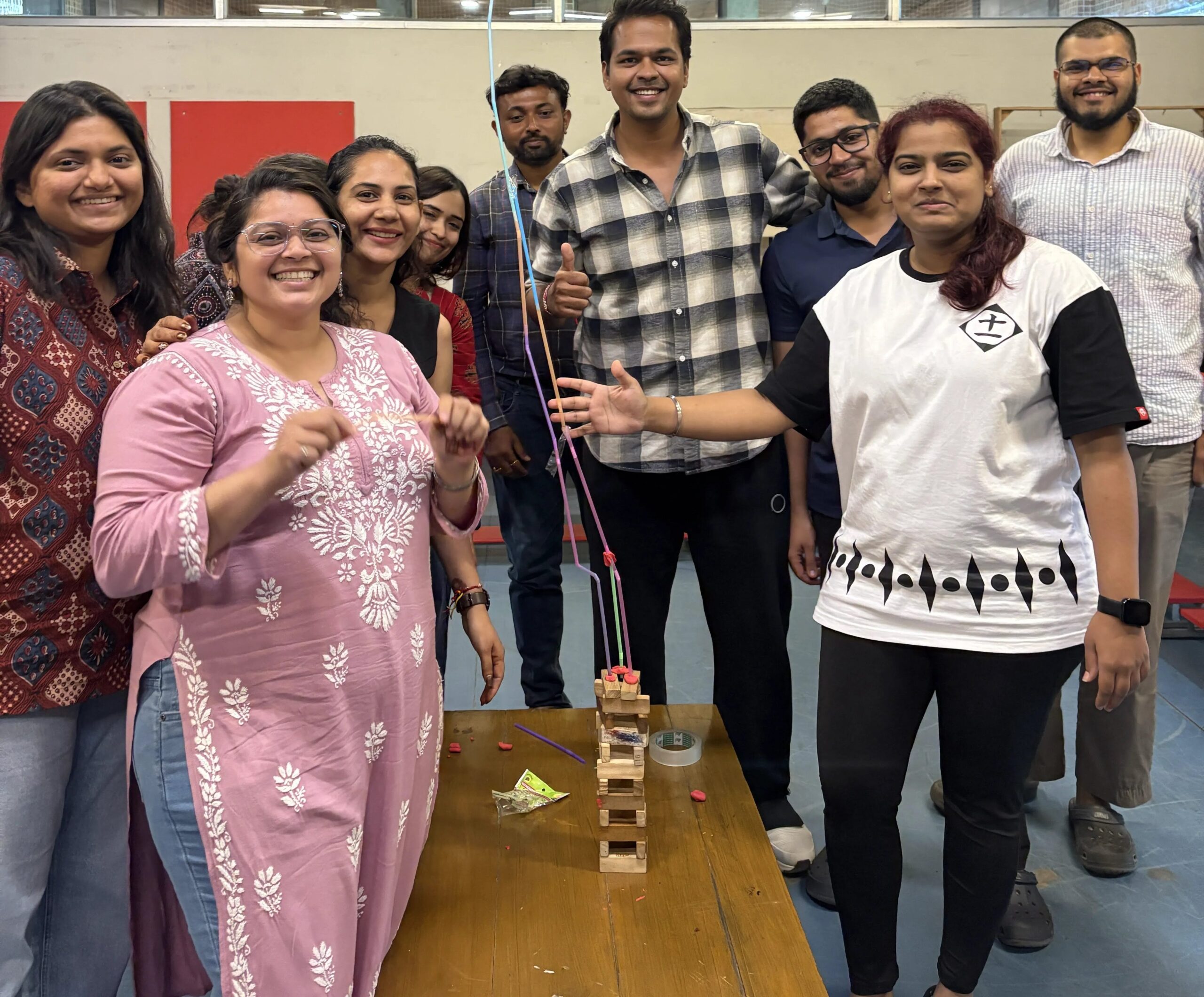
7 habits – beta

Day 1: Looking Inward

We started by defining Success and What a Perfect Life means. And the uncomfortable truth is, most of us have never defined it. We are running towards a definition given by society, family, Instagram. The truth could be different.

What’s stopping us? It’s not time, money or people. It’s fears. Fear of failure, fear of judgement and overcoming this is hard.

That led us to a powerful concept – Primary and Secondary Greatness.

And to build primary greatness, one superpower can help and that is – Delaying Gratification. Not every desire needs to be fulfilled today. The ability to say no to instant pleasure for a bigger future is what separates a perfect life from a pleading life. I practice this with my kids. They can’t get things straight away they got to earn it. That just teaches us how to value things.

So we ended Day 1 with one journal question, which I am still answering:

What’s stopping you from living your perfect life?

My answer was not the organization, my family but my responsibilities towards everything.

Day 2: The Paradigm Shift

Day 2 started with one word – PARADIGM.

Paradigm is not what you see as it is but rather you see as you are.

And that’s why we need a Paradigm Shift. sometimes when hiring people i had notions in head oh fresher – less experience , a parents might be more patient all this come by default but there can be a difference that a fresher due to the background or struggle that person has come up could manage more things too..!!
The biggest shift for me was: Acceptance over Being perfect .

We spend 80% of our energy in the Circle of Concern – news, other people’s opinions, complaints, Things we cannot control etc. rather then circle of influence.

We closed with the beginning of HABIT 2: Begin with the End in Mind. If today was your last day, what would you call a perfect life? If you know the end, you will not get lost in the middle.

My final takeaway:

There’s nothing as perfect life. Make everyday better then yesterday and have a plan in the end to work backwards to make things really happen.
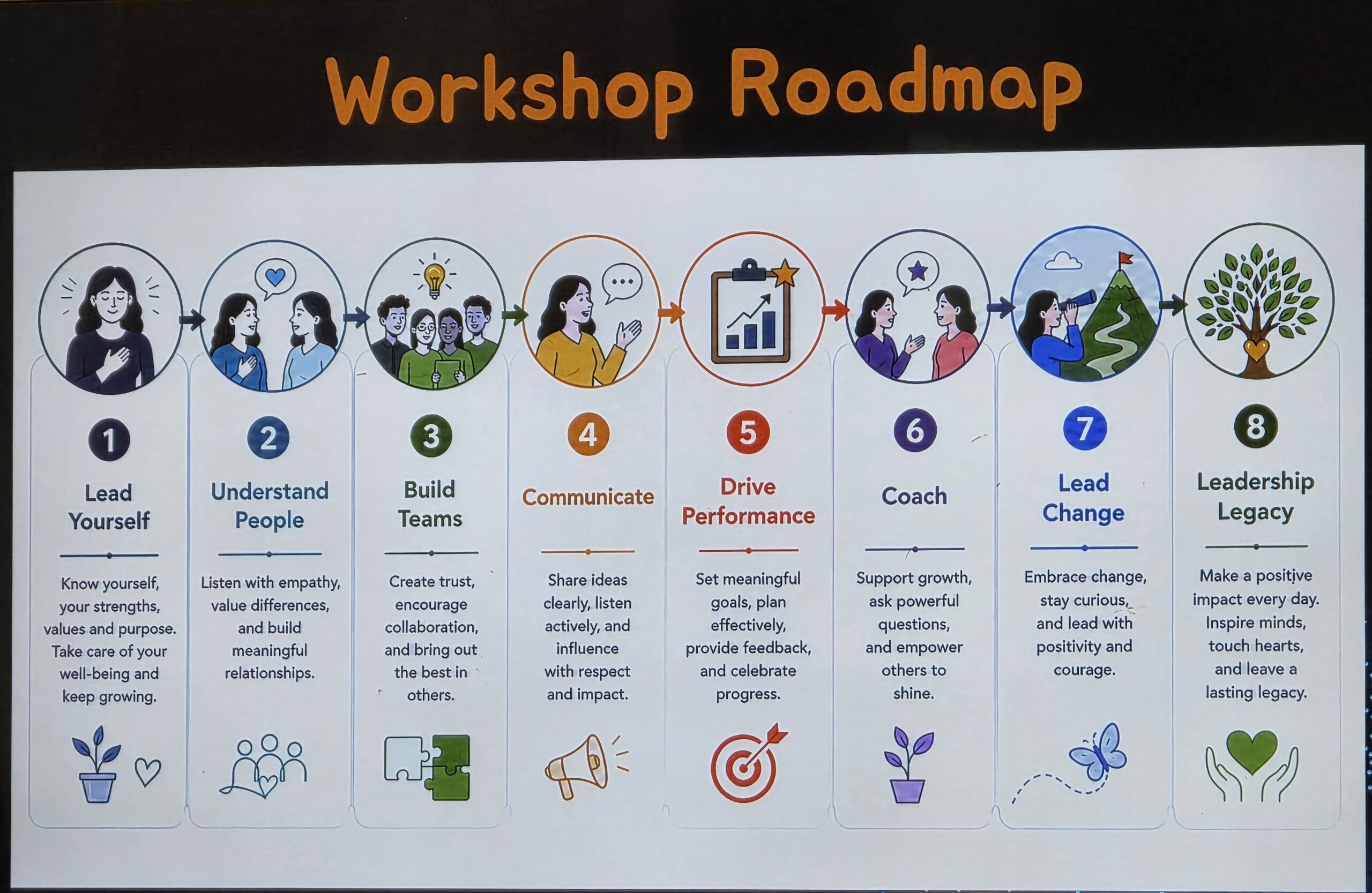
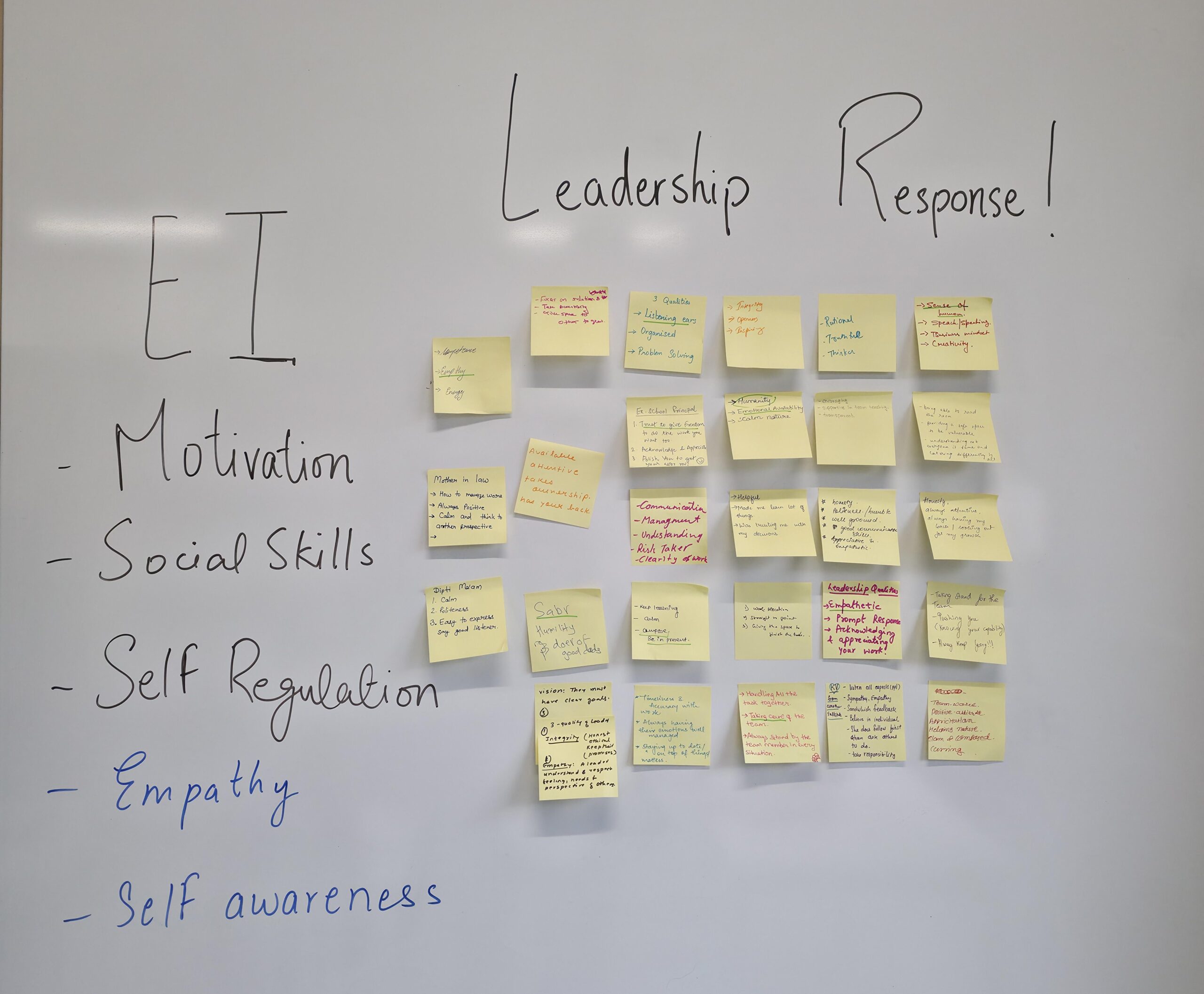
EI + People Management

During the past two days of Life Class, I had the opportunity to explore some meaningful concepts around emotional intelligence, self-awareness, and effective leadership. The sessions helped me look at everyday workplace situations from a different perspective and understand how our emotions can influence the way we respond.

One of the most interesting concepts I learned was the amygdala hijack — a situation where our emotional brain can take over when we experience stress, pressure, anger, or fear. In such moments, we may react immediately without giving ourselves enough time to think about the situation or its consequences.

A key learning for me was the importance of pausing before reacting. Taking a moment to breathe, understand what is happening, and then consciously choosing how to respond can help us handle difficult situations more calmly and thoughtfully. Sometimes, that small pause is enough to create a bridge between an emotional reaction and a rational response.

The sessions also helped me understand that being a good leader is not only about making decisions or giving directions. It is also about self-awareness, empathy, active listening, staying calm under pressure, understanding different perspectives, and responding with maturity and respect.Overall, these two days reminded me that we cannot always control the situations around us, but we can learn to control how we respond to them.

From Blank Paper to a World of Colours.

My First Art & Skill Life Experience

A new academic year brings new beginnings, new experiences, and sometimes an opportunity to step outside what we are familiar with. This year, my first Art & Skill Life class of 2026–27 gave me exactly that opportunity.

For the first two sessions, we stepped into the world of watercolour painting. What initially seemed like simply putting colours onto paper soon became an experience of observation, patience, creativity, and, most importantly, enjoyment.

Learning to Let the Colours Flow

Watercolours have a personality of their own. They do not always behave exactly as we expect them to—and perhaps that is what makes them so beautiful.

Over these two days, we explored the basics of watercolour painting and began understanding how water, colour, pressure, layering, blending, and brush movement can completely change the appearance of a painting. We experimented with different techniques and gradually started seeing how small changes could create very different effects.

What I particularly enjoyed was that there was no pressure to create a “perfect” painting. Instead, the focus was on trying, observing, experimenting, and learning.

More Than Just Painting

The experience reminded me that art is not only about creating something beautiful. It is also about the process behind it.

Sometimes a colour spread farther than expected. Sometimes a blend did not turn out the way I had imagined. Sometimes an unexpected mark actually made the painting more interesting.

And that was the most enjoyable part there was room for mistakes.

Every little mistake became part of the learning process. It encouraged me to try again, change my approach, and look at the result differently.

Learning While Enjoying

One of the biggest takeaways from these two sessions was how enjoyable learning can be when we give ourselves the freedom to explore.

There was something refreshing about sitting down with a brush, water, and colours and simply focusing on what was in front of me. For a while, there was no rush to finish, no concern about getting everything right, and no fear of making mistakes.

It was simply about creating and enjoying the moment.

As an educator, this experience also made me reflect on my own students. We often encourage them to experiment, take risks, learn from mistakes, and enjoy the learning process. Experiencing this myself was a wonderful reminder of how powerful those ideas can be.

Two Days, Many Discoveries

These first two Art & Skill Life sessions may have lasted only two days, but they offered much more than an introduction to watercolour painting.

They reminded me to:

  • Experiment without being afraid of mistakes.
  • Be patient with the process.
  • Observe before trying to control everything.
  • Appreciate unexpected outcomes.
  • Enjoy learning for the sake of learning.

Most importantly, I discovered that art does not always have to be about the final product. Sometimes, the joy lies in the journey from the first brushstroke to the final wash of colour.

And perhaps that is the real beauty of an Art & Skill Life class learning a skill while rediscovering the joy of being a learner.

Two days, a few brushes, plenty of water, and a whole new appreciation for colour. What a fantastic way to begin the journey!

Art and skill – Neha maam

Our Life Class, “Art and Skill,” was a creative learning experience for teachers, led by Neha Ma’am. Over two days, we explored different watercolour techniques through hands-on activities.

We experimented with painting landscapes, butterflies, flowers, fish, learning about blending, layering, colour combinations, and brush techniques. The sessions offered a refreshing opportunity to learn, create, and explore our own artistic expression while enjoying the process of working with watercolours.

Emotional Intelligence:

The two-day Life Class on Emotional Intelligence and People Management gave me an opportunity to look at everyday interactions from a different perspective. The activities and discussions helped me connect the concepts with situations that we commonly experience at work and in our personal lives.

One thing I found particularly useful was learning about different emotional responses and how they can influence our behaviour. It made me realise that the way we handle a situation can sometimes be more important than the situation itself. Being aware of our emotions can help us communicate more thoughtfully and avoid unnecessary misunderstandings.

The discussions on self-awareness and understanding others also stood out to me. We often understand our own intentions, but the way our actions are perceived by others can be different. This made me think about the importance of knowing how our behaviour affects the people around us and being willing to look at ourselves from another person’s perspective.

I enjoyed the activities related to communication and listening. They highlighted how easily we can make assumptions when we do not listen carefully. Giving someone enough time to express their thoughts and trying to understand their point of view can make conversations much more effective.

The People Management part of the class helped me understand that managing people is not only about assigning responsibilities or getting work completed. It also involves trust, empathy, understanding individual differences, giving appropriate feedback, and maintaining healthy working relationships. These are skills that can be useful in our day-to-day interactions with colleagues and students.

Another important takeaway for me was the value of reflection before action. Instead of immediately responding to every situation, taking a little time to understand what is happening can help us make better choices. I feel this is something I can consciously practise in my daily work.

Overall, the two days were a good opportunity to learn, participate, and reflect on my own way of communicating and working with others. I would like to take these learnings forward by being more mindful of my emotions, listening more carefully, and making an effort to understand different perspectives before responding.

My First Two Days of AI Beta LifeClass

The first two days of the AI Beta LifeClass have been an interesting learning experience. I realised that learning AI is not only about learning different tools or asking the right questions. It is also about learning how to think before using AI.

One framework I learned was PACE:

  • P – Problem Framing: What exactly are we trying to solve?
  • A – Assumption Audit: What are we assuming to be true?
  • C – Consequence Mapping: What could happen because of our decision?
  • E – Evidence Gap: What information are we missing?

We also learned that not every task needs AI. Some tasks can be automated, some can be supported by AI, some are better done manually, and important or sensitive decisions need careful thinking.

The sessions also helped me understand, in a simple way, how AI like ChatGPT works and why we should not blindly trust every answer it gives.

My biggest learning so far:

Don’t ask, “How can AI do this?”
First ask, “What am I trying to achieve, and how can AI help me?”

Just two days into the journey, but already a new way of looking at AI. Looking forward to learning more!

Life class Day 1 & 2.

Life Class Reflection: The Leader in Me

The two-day Life Class workshop on leadership and emotional intelligence gave me a chance to pause and look inward — something that rarely happens in the middle of a busy administrative routine. Working alongside teachers and HR colleagues, all learning together without our usual designations attached, made the sessions feel less like training and more like genuine reflection.

One of the biggest learnings for me was the distinction between reaction and response. Reaction is impulsive, driven by short-term emotion, and often shaped by whatever situation triggered it in the moment. Response, on the other hand, is thoughtful — anchored in values and built for long-term outcomes. Understanding the Amygdala Hijack made this click for me. I could immediately recall moments where I’ve felt wrongly blamed, unheard, or treated unfairly, and noticed how quickly those feelings can hijack a conversation before I’ve had a chance to think it through. Learning that this is a natural, almost automatic brain response — and not a character flaw — was oddly reassuring. It also made me realise that the six-second pause before reacting is a small but powerful tool I can actually practise.

The Leader’s Mirror exercise was where things got personal. We were asked to identify the behaviours that have made us successful, and then, just as importantly, to ask when that same behaviour might work against us. As someone from administration, I often see myself as the one who ensures things run on time, completes work as expected, and helps others when needed. But this exercise made me realise that my dedication to completing tasks perfectly can tip into over-dedication — not prioritising within a timeline, or not delegating simply because it feels faster to do it myself. Being the best at doing something is not the same as being the best at enabling others to do it. That line stayed with me long after the session ended.

The Johari Window gave structure to this self-reflection. Mapping what I know about myself, what others see that I don’t, what I keep private, and what remains undiscovered helped me understand why feedback can feel so uncomfortable — and so necessary. It reminded me that my blind spots aren’t failures; they’re simply areas I haven’t yet opened up to honest input. I want to get more comfortable asking colleagues directly, “What’s something about how I work that I might not see?” rather than waiting for feedback to arrive on its own.

We also spent time on giving feedback using the SBI model — Situation, Behaviour, Impact. Keeping feedback factual, rather than personal, is something I know matters, especially in an administrative role where I often have to communicate expectations across departments. Framing feedback around what happened and what impact it had, instead of judging the person, feels like a much more respectful and effective way to have those conversations.

More than any single concept, these two days reminded me that people management — even from behind the scenes in administration — begins with self-management. The systems and processes I coordinate every day run only as well as the relationships behind them, and those relationships depend on how aware I am of my own responses, blind spots, and habits.

My biggest takeaway from the workshop is simple: pause before reacting, stay open to what I don’t see about myself, and give feedback that focuses on the situation, not the person. It’s a small shift in practice, but I hope to carry it into the everyday moments of my role — because leadership in administration isn’t about visibility, it’s about the quiet consistency of how we show up for the people around us.

Life Class Day-2 (7 Habits and Relationships)

Life often moves so quickly that we rarely stop to think about where we are going, what we value, and whether our everyday choices truly reflect what matters to us. The Life Class gave me an opportunity to pause and reflect on these questions through meaningful activities, discussions, and different perspectives.

On Day 2, one activity particularly stayed with me. We were asked to reflect on the last 24 hours of my life and think about what would truly matter if we had only 24 hours left. At first, it seemed like a simple activity, but when I looked at my list, I realised something that surprised me. Not even one thing was about my work, deadlines, or dream job. Instead, my list was filled with relationships, forgiveness, happiness, food, dancing, and spending time with the people who matter to me.

This made me question how I currently prioritise different aspects of my life. Work and financial responsibilities are certainly important, but the activity helped me understand that they are not everything. There are relationships to nurture, moments to enjoy, people to forgive, and experiences that give life meaning. I realised that I want to make more space for happiness, relationships, and the small moments of life while continuing to take responsibility for my work and financial commitments.

The activities and discussions throughout the Life Class also helped me connect these ideas to situations in my academic, personal, and professional life. We explored situations that we may encounter in the future and discussed how our everyday choices can have a much greater impact on our lives than we sometimes realise.

One idea that particularly resonated with me was the difference between reacting and consciously choosing how to respond. We cannot always control what happens to us, but we can often control what we do next. This reminded me that even when a situation is beyond my control, I still have a choice about my response. That small shift in thinking can make us more responsible and intentional in the way we approach challenges.

I also enjoyed how interactive the sessions were. Listening to different perspectives and sharing my own thoughts made the discussions more meaningful. Sometimes, hearing someone else look at a familiar situation differently can make us reconsider our own assumptions and choices.

My biggest takeaway was that self-awareness is the starting point for personal growth. Understanding what matters to us, taking responsibility for our choices, and developing a sense of purpose can help us make better decisions. Growth is not always about achieving something bigger; sometimes, it is about understanding ourselves better and making choices that are more aligned with the person we want to become.

The Life Class was therefore much more than learning a few concepts. It gave me an opportunity to reflect on where I am today, where I want to go, and the choices I can make along the way. Most importantly, it reminded me that a meaningful life is not defined only by achievements, careers, or financial success. It is also shaped by the people we love, the experiences we value, the happiness we create, and the choices we make every day.

Sometimes, the most important step forward is simply taking a moment to pause, reflect, and consciously choose our direction.

My Learning Journey with AI and Google Workspace

I recently started exploring Google Gemini, Google Sheets, Google AI Studio, and Google Workspace Studio to understand how AI can be used in everyday work to improve productivity and efficiency.

Through Gemini and Google Sheets, I learned how AI can help with data analysis, formulas, organizing information, and reducing repetitive manual tasks. I also explored Google AI Studio to understand how AI models can be used to create practical solutions for specific requirements.

The Google Workspace Studio workshop helped me understand how AI and automation can work together. We learned how workflows can analyze information, apply conditions, and notify us only when something important needs attention—for example, identifying relevant emails and sending focused notifications through Google Chat.

Another important learning was prompting using the PACE format. I realized that the quality of AI’s output depends greatly on the prompt we provide. At the same time, human thinking and verification remain at the center. AI can support our work, but we still need to review the information and make the final decisions.

Overall, my biggest takeaway is that AI is not just about generating information—it can help us automate processes, organize data, save time, and create smarter workflows.

I look forward to continuing my learning and applying AI to real-world operational requirements to work smarter and more efficiently.

Life Class- Acad theme

Life Class gave me a moment to step away from the role of a teacher and simply be a person with a childhood of my own.

As we reflected on our experiences, I found myself thinking about how much of our past quietly travels with us into the classroom. The way we were spoken to, understood, guided, or sometimes misunderstood can influence the way we look at children today.

The experience encouraged me to slow down, observe more deeply, and become more mindful of my responses. Instead of immediately asking, “What should I do?”, I want to pause and ask, “What is this child trying to tell me?”

Perhaps that is the real learning for me: teaching children begins with the willingness to keep learning about ourselves. we also learnt about the superpowers we should have. As a teacher, we teach and learn everyday!! Overall, a very good experience- learning, celebrating and reflecting!

1 … 14 15 16 17 18 … 29