From Blame to Learning: Two Days, One Film and a Better Question
Leadership Begins with a Better Question: Reflections on Days 5 and 6
The Life Class workshop continued for another two days, and this time the focus moved from understanding people to building the trust that makes honest conversations possible. If Days 3 and 4 encouraged us to look outward, Days 5 and 6 asked a harder question: once we understand the people around us, what are we willing to change in the way we lead? As before, the learning came in many forms. There were readings, case studies, a walk, group activities, a gallery walk and, at the very end, a movie. Each offered a different way of looking at the same idea.
Day 5: Empathy Before Everything Else
Day 5 began with a simple shift in thinking. A team member says, “I can do it.” A leader says, “I can help you do it.” A great people manager says, “I can create the conditions for you to own it.” It made me pause and ask: which of these am I living in on most days?
We then worked through four challenges: Remember, Recognise, Apply and Carry forward. Each came with one honest question. Which idea from the earlier days helped me understand myself better? What strategy can help me recognise and manage my emotional response in a difficult situation? Where at work could I use something I have learned, and what would I do differently? Which one idea do I want to practise more consistently? Underneath all four sat a single line: respond, don’t react.
The discussion on empathy added another layer. We spoke about cognitive, emotional and concerned empathy. Understanding what someone is thinking is useful. Feeling what they feel is important. But concerned empathy, the kind that moves us to act, is what changes a relationship. We also noted a simple order: trust, then empathy. People open up to those they trust. So often we fill the gaps in what we do not know with assumptions. Empathy begins when we choose curiosity instead.
The reading that followed described four signs of an empathetic leader: noticing signs of burnout in others, showing sincere interest in their needs, hopes and dreams, being willing to help with a personal problem, and showing compassion when someone shares a personal loss. The empathy walk made these ideas real. We were given an identity, introduced ourselves through it to two different people, and talked about what makes work difficult for that person. Speaking from someone else’s perspective is harder than it sounds, and far more revealing.
Can a Leader Be Tough and Still Create Belonging?
The story of Gregg Popovich, from The Culture Code, gave us one of the most useful ideas of the workshop. Popovich was demanding, direct and sometimes intensely critical, yet his teams developed a strong culture of trust and connection. His answer was simple: build the relationship first. He got to know his players as people, beyond basketball. So when the hard feedback came, it did not sound like “You are not good enough.” It sounded like “I know you are capable of more.”
His players could hear “I expect a lot from you” because they had already heard “You matter to me.” Care and accountability, it turns out, do not have to compete.
Day 6: When the Question Changes the Conversation
Day 6 opened with an individual reflection and a gallery walk, built around three prompts: the moment, the mirror and the shift. Which moment or idea from Day 5 stayed with me? What did it make me notice about myself as a leader? And if I changed one behaviour because of it, what would it be?
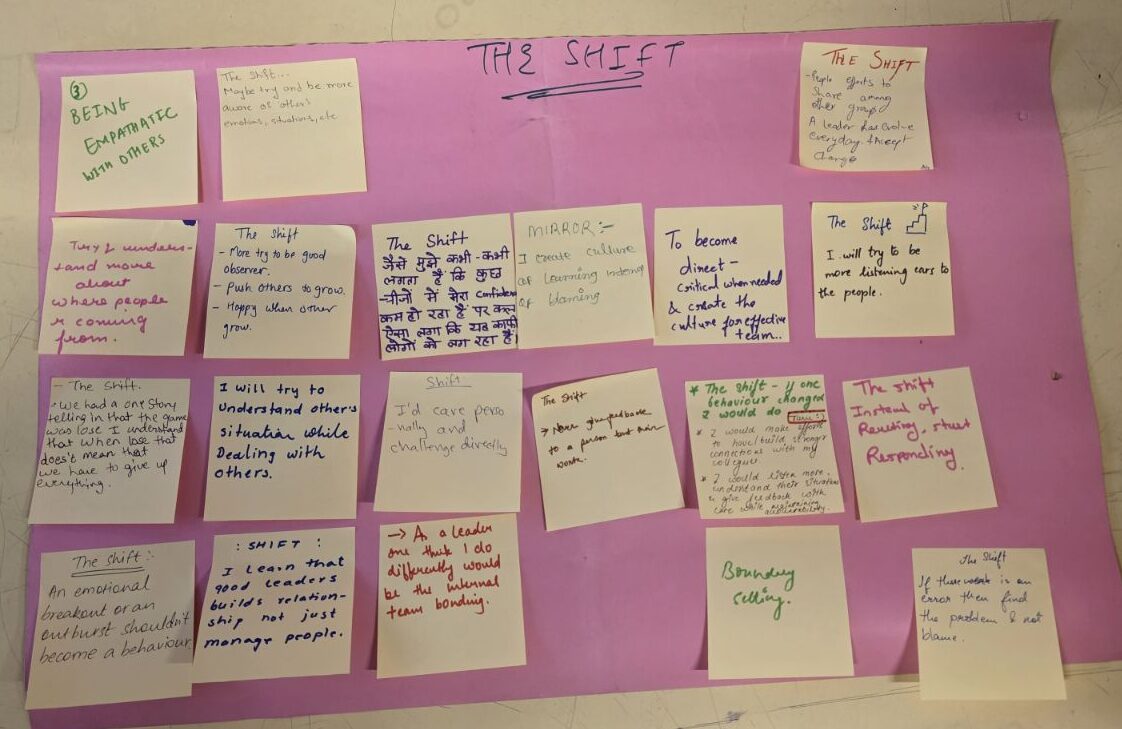
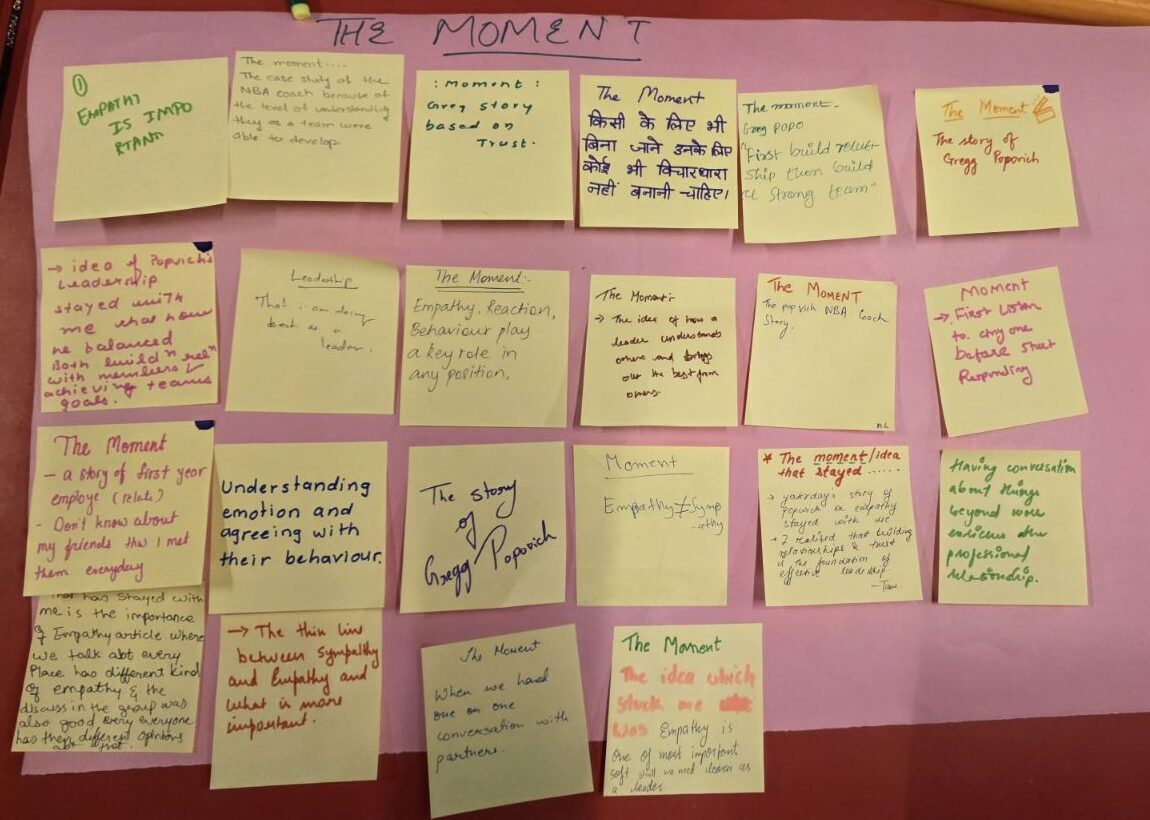
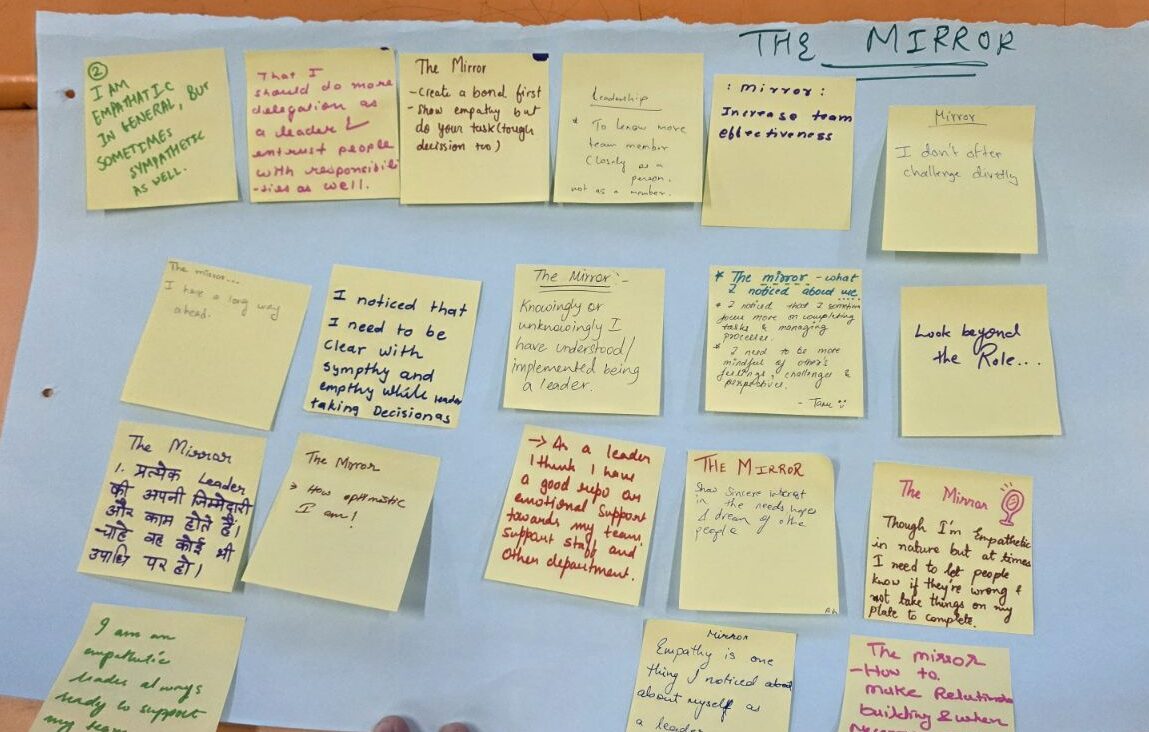
Then came one of the most practical activities of the workshop: Same Failure, Two Managers. A school event had to be delayed. Staffing needs had been underestimated, responsibilities were unclear, a dependency was missed, and concerns noticed earlier were never escalated. Two managers called their teams together.
The first wanted to go through the entire process in order to “identify the breakdown.” It sounded reasonable. Yet when we asked what the conversation made us want to say, many of us leaned towards being careful, explaining why it was not our fault, or staying quiet. The second manager said, “The goal isn’t to place blame, but to improve our process.” A team member spoke up about how staffing was forecast, and the manager thanked them and invited more. In that moment, information became possible.
That led to Question Surgery, built around one line: the difference between blame and learning often sits inside the question. “Who made this mistake?” and “Why didn’t you tell me earlier?” close a conversation before it begins. We practised rewriting a manager’s first three questions without using the words mistake, fault, blame or problem, and it was harder than expected. We also saw how small changes help. Instead of “Any questions?”, try “What am I missing?” Instead of “Everyone okay?”, try “Who sees this differently?”
The aviation case reinforced the idea from another direction. When an airline crew landed on a taxiway by mistake and reported it voluntarily, the report revealed a flooded electrical box that had put the runway lights out. One honest report exposed a wider safety issue. Authority does not mean having all the information. A learning culture does not mean there is no accountability, but it does mean people do not assume that every report is meant for punishment.
The day closed with three questions I would suggest to every manager:
What might my team know that I don’t?
How would I know if they weren’t telling me?
What could I do to make it easier for them to tell me?
The Intern: Leadership Without a Title
The workshop ended with the film The Intern, and it felt like the right way to close. Ben Whittaker, a 70-year-old widower, joins a fast-growing fashion start-up as a senior intern. He has no authority, yet he slowly changes the culture around him.
One small detail stayed with me. Ben carries a handkerchief, and he explains that it is not for himself. It is for lending to someone who needs it. In one image, it says what we spent two days trying to say in words: a good leader notices what another person needs and is ready to help without taking over.
Watching Ben, I saw many of our ideas in action. He looks beyond the role and takes a sincere interest in the people around him. He earns trust through patience and consistency before expecting anyone to open up. He listens, asks gentle questions and makes it easy for others to tell him things. He thanks people, does what he expects of others, and is happy to say, in effect, “I am also learning.” He reminded me that leadership is not attached to a designation. It shows in how we notice, how we listen and how we ask.
Two Days, Many Questions
Across these two days, the workshop moved from empathy to trust, and from trust to the kind of conversations that help a team learn. The biggest takeaway for me is that leaders do not need to have all the answers. They need to ask questions that make it safe for others to answer.
Before we can lead others well, we need to pause, notice, listen and ask better questions. Empathy is not a soft skill. It is the foundation that makes honest feedback, learning and high standards possible.
Trust makes the truth possible.