Critical Thinking

Think Again Before Responding or Reacting
Pause, think about the situation, and then choose an appropriate response rather than reacting immediately. Fact or Belief?
Understanding the difference between what we know to be true and what we believe or assume. Question Your Assumptions
Thinking about whether our assumptions are based on evidence or incomplete information. Is My Belief Always True?
Exploring how beliefs can be influenced by experiences, family, culture, media, and other people. Look at It from Another Perspective
Considering how the same situation may look different to different people. Think Before You Judge
Gathering information and understanding the situation before forming an opinion about someone or something. Why Do I Think This Way?
Reflecting on the reasons behind our opinions, choices, and beliefs. Evidence or Opinion?
Identifying whether a statement is supported by evidence or is simply someone’s opinion. Challenge Your First Thought
Learning that our first reaction or conclusion may not always be accurate. Stop, Think, Choose
Using a simple thinking process before making decisions or responding to a conflict. Different People, Different Views
Understanding that people can have different opinions while still respecting one another. What Could I Be Missing?
Looking for information or perspectives that we may have overlooked. Think Beyond the Obvious
Exploring deeper reasons, consequences, and possible outcomes instead of accepting the first answer. Change Your Mind with New Evidence
Understanding that being open-minded means being willing to modify our ideas when we receive new information. Belief vs. Bias
Exploring how personal beliefs and biases can influence the way we interpret situations.

Day 2: Looking Beneath the Surface (delta7 year1)

Day 2 began with an energetic Auction game, where we were divided into two teams. What started as a game quickly brought out our competitive sides, setting the perfect tone for another day of learning and reflection. We then revisited the key lessons from Day 1, especially the idea of being proactive rather than reactive. One of the most meaningful concepts we explored was the Iceberg of the Perfect Life. What people see on the surface is often only a tiny part of someone’s story. Beneath every picture may lie struggles, emotions, failures, effort and experiences that remain invisible to others. It reminded me that we should be slower to judge and quicker to understand.

We also explored the Circle of Concern and Circle of Influence. While there are countless things we may worry about, our real growth begins when we focus our energy on what we can actually influence. As our Circle of Influence grows, the way we approach our concerns can change too. We then looked at how the seven habits connect with one another, some helping us become independent, while others help us build meaningful interdependent relationships. We also read an excerpt about Viktor Frankl and reflected on how our childhood and past experiences can shape our present behaviour. The most emotional part of the day was a grounding meditative and imaginary experience, where we imagined ourselves on our deathbed, surrounded by the people we love. We were asked to think about what they would say about us after we were gone.

Later, we imagined having only 24 hours left to live. Surprisingly, almost everything I wanted to do involved my family and loved ones.It made me realise that, at the end of life, perhaps the things we chase so relentlessly matter less than the people we choose to spend our time with.We ended by discussing leadership and management, the difference between knowing what needs to be done and knowing how to make it happen.

Day 1: Learning to Choose My Response (Delta7 habits + relationship)

Our first Life Class on Stephen Covey’s The 7 Habits of Highly Effective People began with something as simple and fun as pairing up French + Fries, Sev + Khaman, and sharing our pet peeves as an ice breaking activity. Little did I know that the day would soon move from laughter to some honest self-reflection. The first activity was drawing our perfect life where I drew a table surrounded by family and friends, my favourite food, music, UNO, Jenga and Sequence, along with Bharatanatyam class, a life filled with the people and little things that make me happy. It made me realise that my idea of a perfect life isn’t really about having more, but about having more moments that matter.

Then came the harder questions: What is stopping me from living that life? What am I struggling with? I found myself writing things I don’t always acknowledge i.e. mindlessly spending time on my phone, not slowing down, worrying about things outside my control, seeking validation, and dwelling on past experiences. Seeing these thoughts on paper felt strangely vulnerable. The day’s biggest lesson was Habit 1: Be Proactive. I understood that being proactive isn’t about controlling everything around me. It is about recognising that I can choose how I respond, even when I cannot choose what happens.

Our discussion on paradigm shifts made this even clearer. The story of the father and his children on the subway showed us how quickly our judgement can change when we understand someone’s circumstances. Sometimes, we aren’t reacting to the truth, we are reacting to the story we’ve created in our minds. Between team games, a debate on “Can money buy happiness?” happened and I was in the ‘against’ team, trying to establish that money is important but not a means to all happiness. The reading of excerpts from Covey’s book brought clarity about habits. It became a lesson about myself. Maybe becoming a better version of myself doesn’t begin with changing the world around me. Maybe it begins with pausing before I react, listening to my inner voice, letting go of what I cannot control, and consciously choosing the person I want to be.

There was a shift in the room when we discussed a particular image and the image led us to discover our viewpoints and perspectives. Someone saw a young lady, an eagle, or an old woman.

The facilitators were all ears and very engaging. They introduced us to these concepts we never would have reflected on by ourselves. The transitions to different topics with small games became very interesting. Their personal anecdotes were worth listening to. Very grateful and thankful!

Acad-Theme (Alpha)

The Life Class was filled with moments that made us pause, think, and learn from one another. We watched a meaningful film, celebrated each other’s achievements through the Inter Awards, and explored empathy by “walking in someone else’s shoes.” We also reflected on the superpowers of our teachers and shared what we appreciate about them. Working together helped us understand how our different roles and strengths connect us as a community. This class reminded us that learning can happen anywhere, anytime; even when we are the teachers!

Reflect, Connect & Learn

Today’s session was very engaging and thoughtfully planned. The Bingo game gave us an opportunity to interact with teachers from different programs and get to know each other better. Bringing our childhood pictures brought back nostalgic memories and made the session more personal, especially while reflecting on what we wanted to become when we grew up and what advice we would have given our older selves. Watching The Intern was another meaningful experience that reminded me that even a stranger can teach us valuable lessons and influence our perspective. The enactment activity at the end was a fun icebreaker that encouraged creativity, spontaneity, and teamwork. Overall, the session was a wonderful mix of reflection, learning, interaction, and fun.

The two-day session on Emotional Intelligence

The two-day session on Emotional Intelligence was insightful and engaging. Learning about the Johari Window helped me understand self-awareness, feedback, and how others perceive us. The discussions on leadership qualities highlighted the importance of empathy, communication, and understanding emotions. Overall, the session encouraged me to reflect on my own emotional responses and become more aware and effective in both personal and professional interactions.

Life Class: Practising Reality Through Play 

🎭

What if play could help us practise for reality?

The recent Life Class sessions, facilitated by Juhi Pathak, became an engaging exploration of the body, movement, imagination and expression. Through theatre-based experiences such as movement, sculpture, image theatre, mime and collective creation, we explored the many ways we communicate, respond and connect—often without using words.

Each experience invited us to observe more closely, listen with our bodies, respond to others and experiment with different ways of expressing ideas and emotions. What began as playful and often hilarious moments gradually revealed deeper learning about communication, empathy, collaboration and human expression.

The sessions reminded us that theatre is not merely about performing. It is about observing, connecting, responding, imagining and making meaning.

Most importantly, it showed us how play can become a safe space to experiment with situations and responses—almost like a rehearsal for the realities we encounter in life.

Sometimes, we don’t need words to tell a story.

Sometimes, the body speaks for us. 🎭✨

Emotional Intelligence — Learning to Understand Myself and Others

The two days of Life Class on Emotional Intelligence and People Management gave me an opportunity to look at something we experience every day but often don’t consciously think about, our emotions and the way they influence our actions. What I found most interesting was that emotional intelligence isn’t about controlling or hiding our emotions. It is about understanding what we feel, recognising what triggers us, and making a conscious choice about how we respond.

One of the concepts that stood out to me the most was the Amygdala Hijack. We often believe that we are making a conscious decision when we react to a situation, but sometimes our emotions take over before we have had the chance to properly process what is happening. A small comment, an unexpected situation, criticism, or even stress can trigger an immediate reaction. This made me reflect on situations where I have responded quickly and only thought about what I said or did afterwards. The biggest learning for me was understanding the difference between a reaction and a response. A reaction is often immediate and emotional, while a response gives us the opportunity to pause, understand the situation and then decide what we actually want to do. That small gap between the trigger and our response can make a huge difference.

Going forward, I want to become more conscious of that gap. Instead of immediately responding when something bothers me, I want to take a moment, understand what I am feeling and then decide whether the situation really requires the reaction I am about to give. It sounds simple, but I realised that it is much harder to practise when we are actually in the middle of an emotional situation. That is probably what makes this learning valuable. It is not something that can simply be understood once; it has to become a habit.

Another concept that made me reflect was the Johari Window. It showed me that there are parts of ourselves that we know, parts that others know, and even certain behaviours or qualities that we may not recognise in ourselves. The idea of blind spots was particularly interesting because it reminded me that our own perception of ourselves isn’t always complete. Sometimes, the people around us can notice patterns in our behaviour that we have become so accustomed to that we don’t see them anymore. This made me realise the importance of being open to feedback. Feedback isn’t necessarily someone pointing out what is wrong with us. Sometimes, it is simply another perspective that helps us see ourselves more clearly.

The second day helped me connect emotional intelligence with leadership and people management. One thing I understood was that leadership isn’t simply about assigning tasks or making decisions. A leader also has to understand the people they are working with, communicate effectively and create an environment where people feel comfortable sharing their ideas and concerns. I particularly connected with the importance of active listening. Listening is more than simply hearing someone speak. It means giving the other person your attention instead of already thinking about what you are going to say next. I realised that sometimes people don’t immediately need advice or a solution. They may simply want to know that someone has genuinely listened to them. Being able to understand that difference can make our conversations and relationships much better.

We also discussed constructive feedback and the SBI framework, Situation, Behaviour and Impact. I found this useful because it provides a way to communicate feedback without turning it into a personal judgement. Instead of making a statement about what someone is as a person, we can focus on what happened, what behaviour we observed and what impact it had. This makes feedback more specific, fair and useful, while also making it easier for the other person to understand what they can actually work on.

If I had to take one thing away from these two days, it would be self-awareness. Before we can manage situations or people effectively, we need to understand ourselves, our emotions, our triggers, our habits and the way our behaviour affects others. I don’t think emotional intelligence means becoming a completely different person or never getting angry, frustrated or overwhelmed. For me, it means becoming more aware of those moments and learning to handle them better.

Sometimes the most important thing we can do is simply pause. Pause before replying, pause before making an assumption, pause before judging someone, and pause long enough to understand what we are actually feeling. These two days made me realise that emotional intelligence is not something that can be learnt in a classroom and then completed. It is something we practise through everyday conversations, challenges, disagreements and relationships.

I may not always get my response right, but being aware of the difference between reacting and responding gives me the opportunity to do better the next time. More than anything, these sessions reminded me that understanding others starts with understanding ourselves. The more aware we become of our own emotions and behaviour, the better equipped we are to communicate, build relationships and eventually lead others effectively.
Arts & Theatre | Day-1 & 2

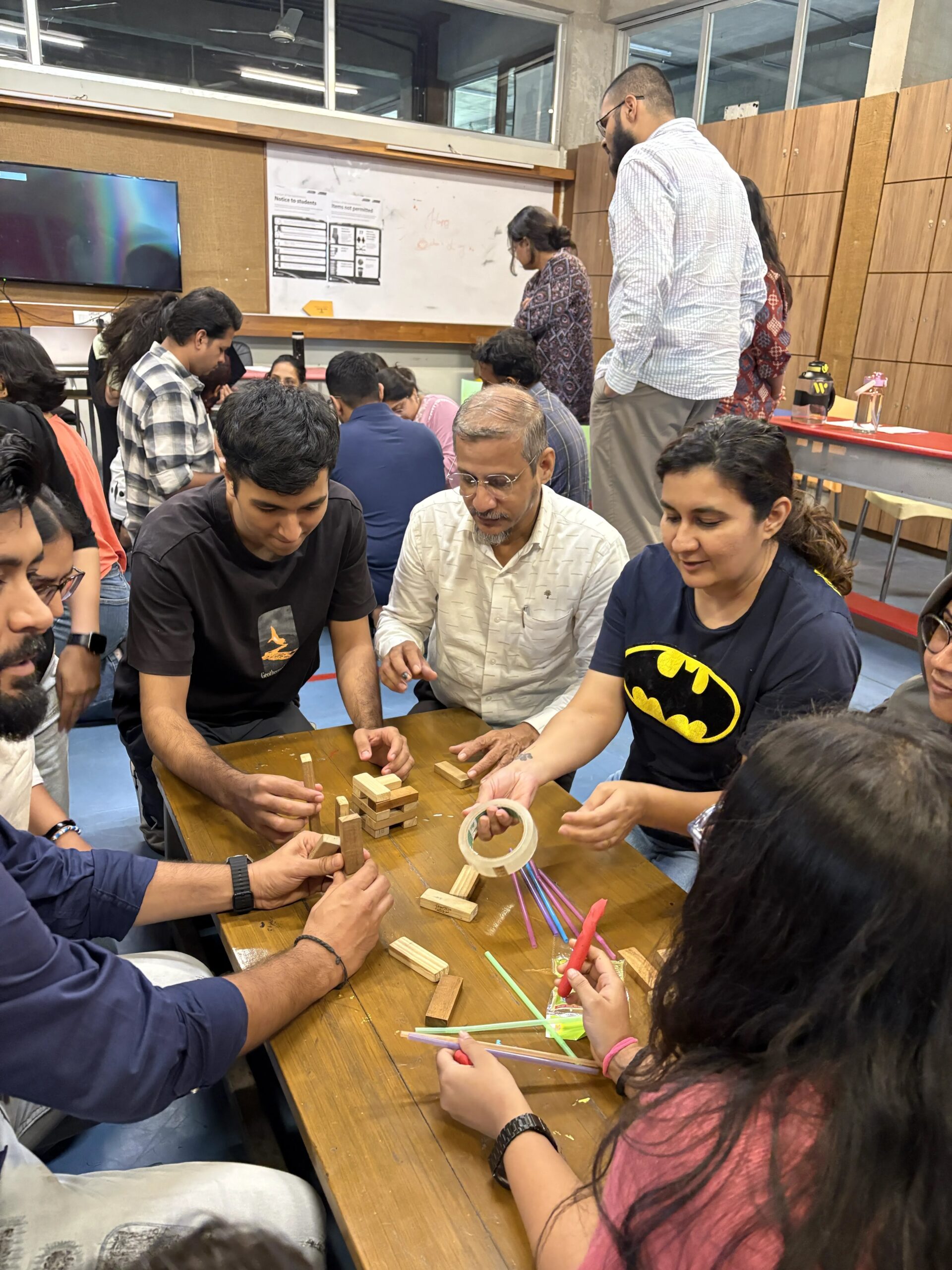
Two Sessions. So Many Ways to Express. 🎭The past two sessions of Life Class have been an incredible exploration of the body, movement, imagination, and storytelling.From Colombian Hypnosis and the fascinating exercise of pushing against each other, to exploring Cross & Notes, every activity challenged me to listen, respond, and communicate without relying on words.We explored Clay & Sculpture, discovering how bodies can become forms and shapes. Image Theatre taught us how a single frozen image can communicate an entire idea. Through The Machine, we experimented with rhythm, connection, repetition, and collective movement. And with Mime, we discovered how much can be expressed through silence, gesture, and precision.What stood out for me was that theatre is not just about performing—it is about observing, connecting, responding, imagining, and finding meaning through the body.These two sessions reminded me that sometimes, the body speaks much louder than words. And there is so much more to discover. 🎭✨#LifeClass #Theatre #TheatrePractice #ImageTheatre #Mime #Movement #ColombianHypnosis #BodyAndMovement #DramaEducation #LearningThroughTheatre #ArtsEducation

Life class reflection-Day 1 & 2

In the two Life Classes conducted by Puja Ma’am and Hardik Sir, I gained valuable insights into leadership and self-awareness.
On Day 1, I learned about the concept of Amygdala Hijack, which happens when we experience a trigger and our emotional response takes over our ability to think rationally. I could connect with this concept very well and reflect on situations where I may have experienced such responses. We also discussed the importance of self-awareness for a leader. Our facilitators shared examples of leaders we are all familiar with and how they respond to challenging or difficult situations. This helped me understand how a leader’s awareness of their own emotions and reactions can influence the way they handle situations and people.
On Day 2, I learned about the different characteristics of leaders that we can observe in their behaviour. We also explored the difference between immediate gratification and long-term gratification through the Marshmallow Experiment. This helped me reflect on how making thoughtful choices and delaying immediate rewards can contribute to achieving larger, long-term goals.
Another important learning was the Incident–Behaviour–Impact (IBI) method of giving feedback. I understood how structuring feedback around a specific incident, the observed behaviour, and its impact can make feedback more objective, clear, and constructive. I feel this will be particularly useful in helping my team members understand areas for improvement without making the feedback feel personal.
Overall, these two sessions helped me reflect on my own responses, understand leadership behaviours better, and think about how I can apply these learnings in my role as a leader and as a team member.

1 … 19 20 21 22 23 … 29